The post The People of Phi Delt 2030 – Engagement appeared first on Phi Delta Theta.
]]>
Engagement
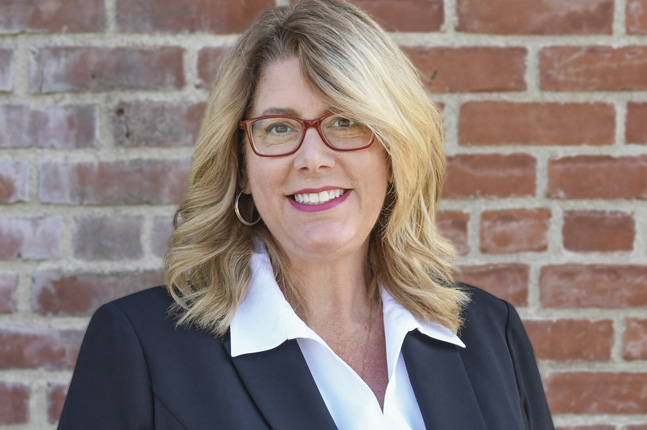
Written by Beth Bell
What would you do if your high school senior son went to his college’s orientation weekend, and returned from that weekend having pledged a fraternity?
Wabash College is a small, private, men’s liberal arts college in Indiana. More than half of its students live in the one of the ten fraternity houses. Our son attended their open houses with a new friend, Felipe, and the two decided that Phi Delta Theta looked like a good group of guys.
I am a member of Alpha Omicron Pi (DePauw) and cherish and cherish my sisters. But neither my husband nor our daughters had affiliated with any group, so we were a little shocked that he’d made such a big decision without ever really talking about fraternities before. We quickly realized that he’d made a good choice.
During his time on campus, I was invited to serve on a newly formed Wabash Parent Advisory Council and we performed many useful tasks to assist Wabash students during my tenure. I also learned that Phi Delt parents are very supportive—from the fall tailgates to the spring Mothers and Brothers luncheon where moms bring baskets to auction and the money raised is used to purchase something useful for the chapter house. Over the years it’s become a family event with dads and siblings joining in the fun. Connections with other parents have forged friendships that go beyond our sons and have lasted long after graduation.
Collin benefited from mentorship from many of the chapter’s alumni, especially Hugh Vandivier, ’91, Jim Dyer, ’83, and Rob Rudicel, ’92. They set a wonderful example for these young men. As a chapter officer, Collin had great accountability serving on executive board and dealing with the everyday concerns of leading a chapter of forty guys. Sometimes, as you can imagine, it was not always the easy road. Starting as philanthropy chairman, then moving to scholarship chairman, recruitment chairman, and finally ending his time in the house as chapter president, Phi Delt gave him the opportunity to develop both leadership and diplomacy skills. He continues to be involved by serving on the Chapter Advisory Board.
Whether for better or worse, parents are more involved than ever in the lives of their children. But there’s a fine line between showing an interest and smothering. We need to communicate with and empower parents to have a role but also feel comfortable stepping away and trusting that their sons are part of an organization that has their best interests at heart. I see the Fraternity’s newly-developed Family Council as a liaison between the chapters and their families, a sounding board for questions and concerns, and resource for families and their students. We have seen firsthand the benefits of Greek affiliation and are grateful he chose so well.
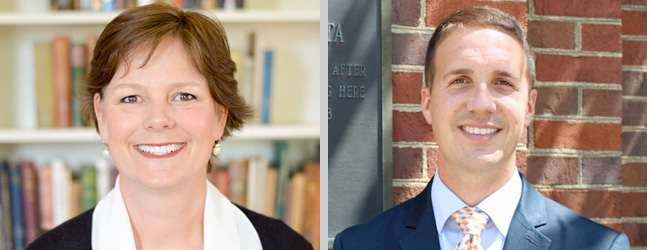
Written by Kelly Derickson, Editor of The Scroll & Engagement Coordinator and Steve Good, Senior Vice President of Growth, Engagement & Philanthropy
Ongoing goals of any great organization often include a well-executed communications plan, using a variety of communication methods to reach its many constituents. For Phi Delta Theta, internal constituents include alumni, undergraduates, and families. In addition to communicating with internal constituents, it’s vital for the Fraternity to communicate outward to university officials, fraternity and sorority life advisers, fraternal peers, and the national media outlets who play an integral role in what is being said about our industry.
Phi Delt 2030 includes an emphasis on improving the Phi Delta Theta brand position and its various communications platforms as well as tasking its volunteers, alumni, undergraduates, and families with helping craft various messages. Hearing from voices outside of General Headquarters advocating for the value of Greek life and Phi Delta Theta is often more impactful than hearing from a staff member.
Some of the plan’s initiatives for increased engagement include the development of advisory councils from both the family and campus perspective. These councils represent additional advisers or experts to various programming decisions, and will to serve as sounding boards and advocates to the Fraternity’s greater communities. And in many cases, these non-Phi advisers can become integral members of Chapter Advisory Boards or House Corporations.
Beth Bell’s story about being an advocate for her son at Wabash College on their Parent Advisory Committee, and her confidence that Phi Delta Theta is on the right track by creating a similar guiding group of input, represents one large step (of many) for Phi Delta Theta.
The post The People of Phi Delt 2030 – Engagement appeared first on Phi Delta Theta.
]]>The post The People of Phi Delt 2030 – Member Development appeared first on Phi Delta Theta.
]]>
Member Development
Written by Bennett Nelson, Akron ’17
That first day on Akron’s campus, it never occurred to me that it would be a college men’s fraternity that would be THE thing that made my Akron experience extraordinary.
It was a guy I met while helping move freshman students who invited me to a Phi Delta Theta event later that afternoon. Initially, I declined the invitation. But he persisted and suggested I had nothing to lose by just stopping by the house for a free cheeseburger.
What I discovered about the Phi Delts was that they were exactly what I was looking for. They had DRIVE, genuine friendships, and a commitment to achieve their goals—qualities that were immediately appealing to me.
I quickly became a campus leader in extracurricular activities including Student Resident Life and organizations at the College of Business. But it soon became clear that I wanted to devote a more of my time to the Fraternity.
In my sophomore year, I became VP and was re-elected my junior year. I attended the Kleberg Emerging Leaders Institute one summer and was a peer mentor the next. My campus time became dedicated to my schoolwork and working with my brothers and alumni to build upon the strength of Ohio Epsilon.
At Kleberg I realized the broader reach of Phi Delta Theta from brothers from all across the continent. Though our groups differed, we all shared similar goals and expectations, guided by the Cardinal Principles that lead to greater ends.
At Northeast Ohio Alumni Club meetings, I met great Phis and prominent businessmen. Early on I met Brother Roger Read, ’63, who still regularly meets with undergraduates as a mentor and introduces them to the greater Akron community.
At Ernst & Young I lead a team as a senior consultant. It is Phi Delta Theta that greatly prepared me for this work; from officer leadership experiences, online resources like PDT U, certified CAB support and coaching, conferences where I caught the broader Phi Delt vision, meeting alumni mentors who helped me network. During professional interviews, it was the skills learned from my Phi Delta Theta experience that really made the difference.
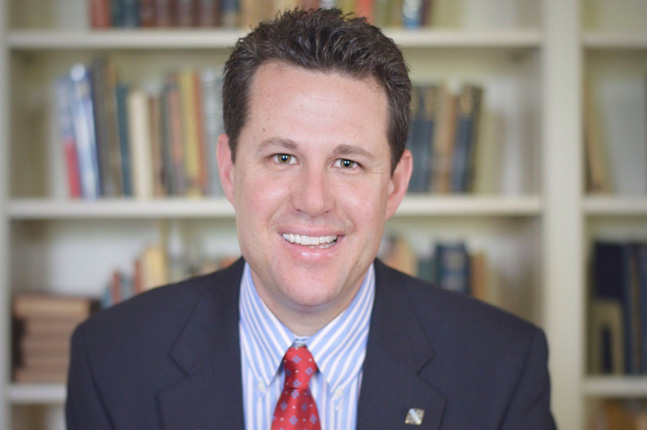
Written by Clay Coleman, Phi Delta Theta Director of Education
Simply put, Phi Delta Theta is in the business of educating its undergraduate and alumni members in an effort to enhance their personal trajectory. To be successful today, members must apply and transfer lessons learned on campus and from leading their chapters, into to real world experiences. Bennett’s account highlights the impact that Phi Delta Theta conferences served to help members establish their plans and strategies as leaders. Then through his vice president role, he benefited by online resources through PDT U, the Fraternity’s online education initiative. In addition, he was influenced by his chapter’s Chapter Advisory Board members earned annual certification via online education provided by the Fraternity. Lastly, it was an alumni mentor who helped him understand the transition to career by exposing him to local professionals and possible job opportunities.
With Phi Delt 2030’s focus on personal growth, professional readiness, and fulfillment in life, Phi Delta Theta will offer the opportunity for its members to have a throughline from being inducted as a Phikeia to the aforementioned experiences. It is the Fraternity’s aim that every aspect of a Phi’s membership development experience will result in a certification endorsed by a third party. Rather than Phis simply listing their membership or officer position on their resume or LinkedIn profile, they will have a valuable endorsement that transcends Fraternity, and clearly represents the personal and professional competencies that they gained as members.
Success as a values-based leadership society of men involves preparing our men to thrive in the future workforce and live out the Fraternity’s Cardinal Principles. This certification earned upon completion will be a key differentiator as we recruit and retain future members. Generation Z students who join Phi Delta Theta want to know upfront what is the ROI (return on investment). We will know we have achieved success when newly recruited members can claim that they chose Phi Delta Theta in large part due to its innovative member development experience.
The post The People of Phi Delt 2030 – Member Development appeared first on Phi Delta Theta.
]]>The post The People of Phi Delt 2030 – Growth and Retention appeared first on Phi Delta Theta.
]]>
Growth & Retention
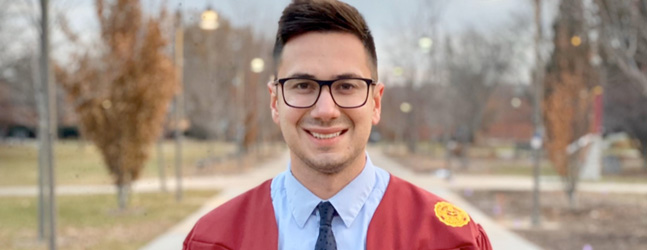
Written by Galen Miller, Central Michigan ’19
I came to college as a shy kid who wanted nothing to do with anyone. But when I enrolled at Central Michigan University (CMU), it was time to get out of my comfort zone and make the best of college.
I learned about Phi Delta Theta from Angelo Topi, ’18, telling me about a leadership opportunity on campus. After finding out it was a fraternity, I was hesitant, but looking back I see that joining Phi Delt was the best decision of my life.
The Michigan Zeta Colony was actively recruiting new members. It was so cool to see a group of strangers become best friends, but even better was the opportunity to collaborate with others, which led me get involved on campus and build relationships.
Because we were a colony and able to have a fresh framework built from the ground up, we set the standard for the organization. We wanted to be more than a typical fraternity and prioritized giving back to the community.
Around this time, 100 miles away, Flint, Michigan, was dealing with a water contamination crisis. This was an outrage to me, and I knew we had to help the residents who were suffering from this man-made crisis. I suggested that Phi Delt distribute water to help the residents in Flint.
After spending weeks of planning, we headed to Flint to help distribute water, where we joined with the brothers at Michigan Delta at Kettering University who felt the impacts of the water crisis firsthand. As families in cars received their water, I was devastated to see what they were going through to simply get clean water. In this crisis I saw other real needs that weren’t being met and decided to create the nonprofit Pack Your Back to help students and teachers receive critical supplies to have success in the classroom.
This organization has opened up opportunities for so many people, me included. Without Phi Delta Theta, Pack Your Back likely would have never happened. Building connections with people like Elon Musk, Jaden Smith, Casey Neistat, Alyssa Milano, and Mark Ruffalo has allowed Pack Your Back to thrive. Since the organization’s start in early 2016, over 25,000 students have been impacted.
Joining Phi Delta Theta changed me. It changed the community. And it is changing the world. Friendship, Sound Learning, and Rectitude motivate me to impact others and leave a lasting legacy. Let’s unlock our potential and unleash it to the world.
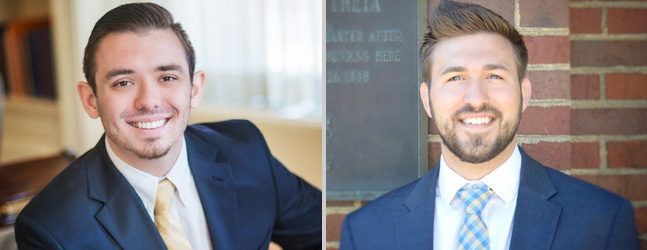
Written by Alex Atkinson, Phi Delta Theta Director of Expansion and Jim Rosencrans, Phi Delta Theta Director of Growth
Galen’s Phi Delt leadership journey showcases how each Phi contributes to his campus, his chapter, and his community. Yes, a larger membership brings in greater revenue and services for any association, but the Phi Delt 2030 growth plan focuses on attracting leaders like Galen to the organization, retaining current members, and ensuring that our chapters flourish.
Increasing market share on existing campuses and pursuing expansion opportunities drive the Phi Delt 2030 Growth and Retention initiative. Approximately 65 percent of our chapters today are above the average chapter size on their campus, but we hope this increases to 80 percent by 2030 and translates to long-term chapter success. And the goal of 250 chapters by 2030 means the Fraternity will add five new groups each year (net chapter loss) in the next ten years. Accomplishing increases will ultimately grow undergraduate membership.
The Phi Delt 2030 aim to continue to improve new member retention will rely on the Fraternity’s collective ability to showcase its value, develop superior recruitment skills (both for students and advisers), and ensure quality new member education. Improving annual chapter retention to 98 percent will rely on data to guide the Fraternity’s resources and support to chapters that need the most attention.
For Phi Delta Theta to thrive, it is imperative that continued growth leads to diverse chapters filled with high-performing and purpose-driven members. Regular demographic surveys highlight our student makeup and how our demographic trends compare to the student population on the campuses where we are located. Recruitment education will be amplified online, at a centralized annual conference, and enhanced by having recruitment advisers at 100 percent of our chapters.
A fraternity is only as good as its people. We fully understand that to be recognized as the premier fraternal organization in North America, we must attract and retain the best students on current campuses and inspire top leaders to bring Phi Delta Theta to new campuses.
The post The People of Phi Delt 2030 – Growth and Retention appeared first on Phi Delta Theta.
]]>The post The Evolution of Phi Delt 2020 appeared first on Phi Delta Theta.
]]>Since being introduced in 2010, the goals and objectives set in our strategic plan Phi Delt 2020 have produced incredible results. Examples include a 17% overall increase in membership, a 36% increase in the attendance of expanded educational programs, a 50% increase in the Foundation’s endowment and much more.
While these results are impressive, they are only the beginning. The strategic initiatives of growth, education, support, communication, capacity, and funding require continued and aggressive action in order to make Phi Delta Theta the premiere fraternal leadership development organization in North America by 2020.
Each initiative is measured and discussed at all General Council meetings. The plan’s aggregate results, along with environmental and industry data, is analyzed every two years at the start of each biennium by the General Council and the General Headquarters’ Senior Staff. Adjustments are then made to the plan.
This biennium was no different. During a comprehensive planning session, the Fraternity’s leadership continued their commitment to the previously determined objectives and newly identified needs to be addressed in 2014-2016. Some of the newly identified needs include:
- An effort to improve the Fraternity’s housing stock led by the Fraternity’s newly hired Director of Housing and Facilities
- A commitment to provide education surrounding sexual assault prevention and Title IX to all undergraduate members and volunteers through the Fraternal Health and Safety Initiative
- Member development outcomes that will leverage campus resources and partnerships
- Standardized undergraduate officer certification through PDT U
- Enhanced alumni engagement through traditional methods and technology
Over the next two years, you’ll continue to hear about how Phi Delta Theta is honoring Brother Morrison’s quote by “doing something better.” The Fraternity has great momentum, and we appreciate the effort being made by so many to make Phi Delta Theta the greatest version of itself.
The post The Evolution of Phi Delt 2020 appeared first on Phi Delta Theta.
]]>