The post Kansas Delta: A Legacy of Excellence and Chapter Operations appeared first on Phi Delta Theta.
]]>Kansas Delta, the Phi Delta Theta chapter at Wichita State University, has been a pillar of excellence and brotherhood since its founding on May 9, 1959. With over sixty-five years of history, the chapter has consistently set the standard for leadership, scholarship, and service. Winning the Founders Trophy two years in a row, Kansas Delta is striving for a historic third consecutive victory this summer.
Kansas Delta has earned several honors within the past year, including Gold Star accreditation, highest GPA, and recognition for excellence in risk management, recruitment, new member retention, academics, ritual, and philanthropy. As an Iron Phi and Triple Crown Chapter, Kansas Delta continues to exemplify chapter operations within Phi Delta Theta.
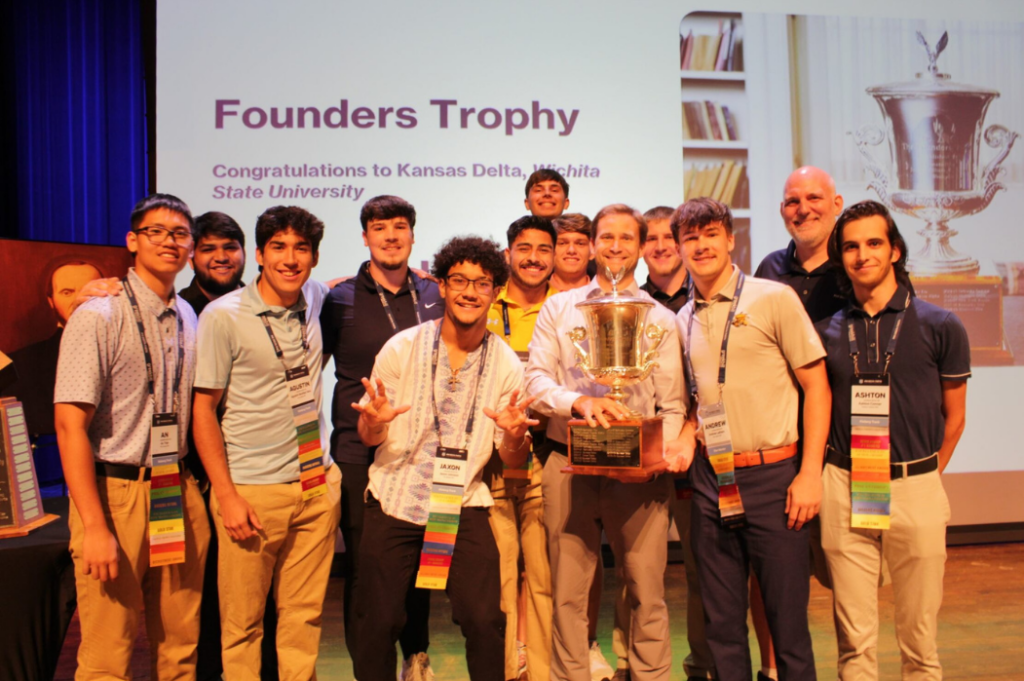
Phi Delta Theta General Headquarters reached out to current Kansas Delta President, Cooper Zimmer, ’26, to answer some questions about their chapter’s success in chapter operations.
What were some of the biggest challenges the chapter faced and how did you overcome them?
By far our biggest challenge was COVID. Like other organizations at the time, our operations had paused and we lost our campus culture and drive. However, our brothers took on the challenge to return to the heights of several years prior and navigate through the new atmosphere and campus culture. Our passion and commitment to the Fraternity led us to assist the ALS community with the Live Like Lou Foundation. Service helped us feel closer to our Cardinal Principal of Rectitude, which defined the culture we have today.
How has philanthropy and service efforts played into the chapter’s success?
The events we have participated in or hosted in prior years connected us closer to the Wichita community and fuels our members. The emphasis on philanthropic and service efforts is the key driver to our success. Before COVID, Kansas Delta hosted an annual philanthropic golf tournament. Due to the pandemic, we had to shut it down and was not reinstated until 2023. Despite the lengthy time between the golf tournaments, our inaugural tournament was a success and we raised roughly $16,000. The success from this event motivated our members to join a cause greater than themselves and to work collectively to ensure the success of this tournament for years to come. The philanthropic success has bonded our chapter, but as importantly, the impactful service events have placed our connections closer to the community—especially to individuals. We are a continued participant in the ALS Walk at our local minor league baseball stadium where we are the largest supporter of organizing, setting up, and tearing down the event. It has been a pleasure to take the burden off these individuals and leave ALS better than we found it.
How did leadership within the chapter evolve over time, and what role did mentorship play in that?
The beauty of fraternal organizations is the cyclical nature of leadership—it has to change hands annually. This atmosphere places greater emphasis on the mentorship and transition of old to new members and this was an excelling trait of our leaders. Mentorship is vital to continuing success and we continually seek out emerging new members and prime them for success by issuing opportunities of leadership at a lower workload, encouraging an open environment for constructive criticism and how to turn adversity into success, and continued connection with the leaders to breed a line of open communication. These methods have eased the transition between leadership and prepared up-and-coming leaders to be the next face of the chapter.
Who were the individuals or groups—inside or outside the chapter—who played a crucial role in your growth?
Our chapter advisory board played a crucial role navigating our members through the unstable atmosphere after 2020 and they were a continuous support line when needed. Our chapter advisors strike an exceptional balance of assisting and providing new content when necessary but allowing the members to use their judgment and make key decisions individually.
How did alumni support, campus involvement, or community engagement contribute to the chapter’s growth?
The alumni are the backbone of our organization and have continued to be strong supporters of our chapter. Whether through philanthropic contributions at our Clark Jackson Classic tournament or our Spaghetti Dinner, financial support to keep the lights on and maintain our chapter facility, or attendance at our annual alumni event, our alumni uphold the tradition of excellence at Kansas Delta. Campus involvement enhances visibility among student organizations and university faculty/staff, strengthening our connections to prominent officials. The Kansas Delta Chapter requires all members to join a registered student organization, which sustains our success in campus visibility.
What advice would you give to other chapters looking to build similar success?
Stay organized. Due dates, objectives, goals, one-on-one meetings with officers and members, continuous check ups on those with responsibilities, and do not forget to incentivize! Organization alone will make or break a chapter’s operational success and the leaders of a chapter must be well-versed in this or it will be a rude awakening. To-do lists are simple and effective. It is commonplace to use a calendar, but it is how you utilize it that makes a difference—throw due dates in the calendar and share it with the chapter so all members are connected.
What’s next for your chapter? How do you plan to sustain or build on this momentum?
To avoid falling stagnant, sustaining success is difficult; however, a chapter cannot have the mindset to continue at a flat pace year over year or the organization will eventually regress. We are using what has worked for us previously and continuing to implement those strategies while being observant of our weaknesses and how we can improve upon those. With this in mind, we are continuing the priority of our brotherhood while using what was successful for our operational success to reach new heights for recruitment, philanthropy, community service, and further.
If you could go back and give your past selves one piece of advice, what would it be?
Do not forget your brothers. Remember that brotherhood is as equally important as your work ethic to the chapter and it is critical to find a balance to keep members feeling valued and engaged.
The post Kansas Delta: A Legacy of Excellence and Chapter Operations appeared first on Phi Delta Theta.
]]>The post Reflecting on a Remarkable 2024: A Year of Growth, Impact, and Brotherhood appeared first on Phi Delta Theta.
]]>A New Look
January marked the launch of Phi Delta Theta’s reimagined brand and website, bringing in a modern new look for our Fraternity. The updated design reflects our values and mission while enhancing how we connect with members, alumni, and supporters worldwide.
McKenzie Family Presidents Leadership Conference
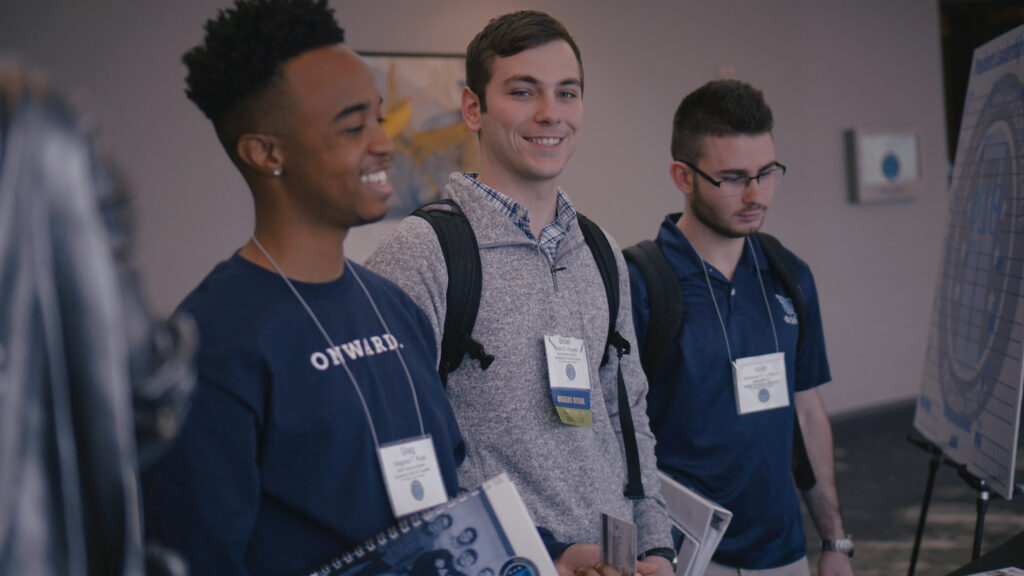
This year’s McKenzie Family Presidents Leadership Conference set the tone for 2024 by equipping chapter presidents with the skills and resources needed to lead with purpose. The event highlighted our dedication to cultivating effective and ethical leadership at every level. We can’t wait to ring in 2025 in St. Louis with our newly-elected chapter presidents.
New Expansions: Growing Our Brotherhood
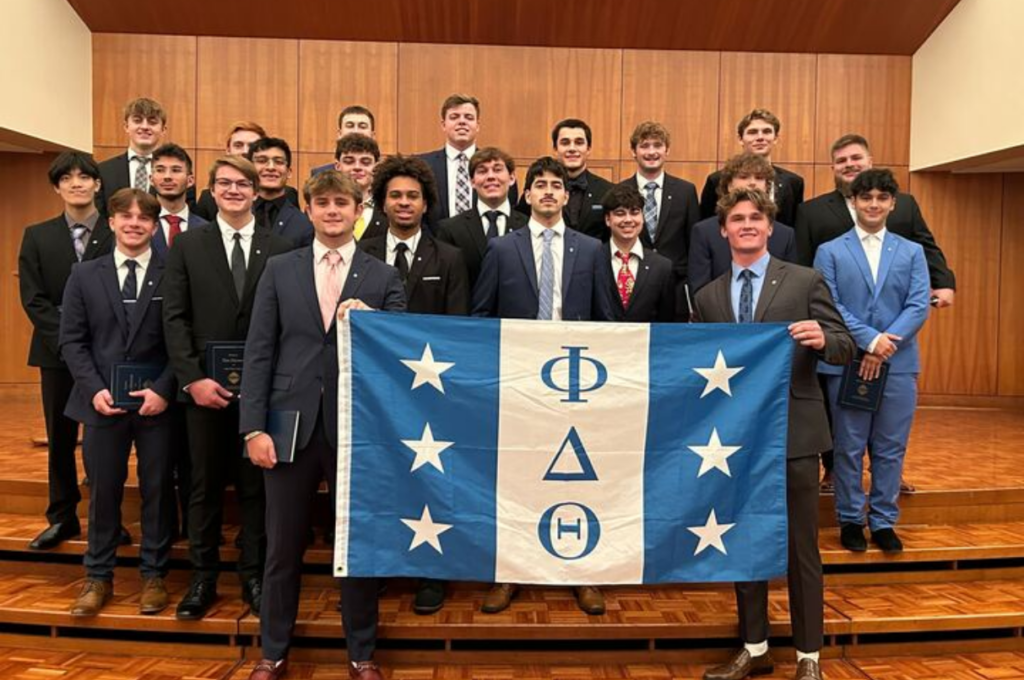
This year, Phi Delta Theta reached new heights of growth and brotherhood! We celebrated the historic addition of our 300th chapter, Connecticut Delta, at Eastern Connecticut State University. Our Fraternity also proudly expanded and returned to several campuses:
Spring 2024 Emerging Chapter Inductions:
- Missouri Kappa – University of Missouri, Kansas City
- New Jersey Zeta – New Jersey Institute of Technology
Fall 2024 Emerging Chapter Inductions:
- Florida Gamma – Florida State University
- Ohio Zeta – Ohio State University
- New Jersey Alpha – Rutgers University
- Michigan Theta – Grand Valley State University
Spring 2024 Chartering Installations:
- Connecticut Delta – Eastern Connecticut State University
- Ohio Theta – University of Cincinnati
- North Carolina Beta – University of North Carolina, Chapel Hill
Fall 2024 Chartering Installations:
- Pennsylvania Theta – Penn State University
Looking ahead to the spring, we’re excited to announce expansions to California State University, Fullerton with the California Alpha Alpha Chapter and return to Georgia College & State University with the Georgia Zeta Chapter.
Celebrating Our Legacy with the Lou Gehrig Community Impact Team

Phi Delta Theta proudly announced the inaugural Lou Gehrig Community Impact Team, honoring the legacy of Brother Lou Gehrig through meaningful community service. This initiative underscores our ongoing commitment to making a difference in the fight against ALS.
Honoring Excellence On and Off the Field

In June, Paul Goldschmidt of the St. Louis Cardinals received the 2024 Lou Gehrig Memorial Award. The ceremony in St. Louis brought together Phi Delta Theta brothers and baseball fans alike to celebrate an athlete who exemplifies the qualities of Lou Gehrig both on and off the field.
Celebrating Lou Gehrig Day
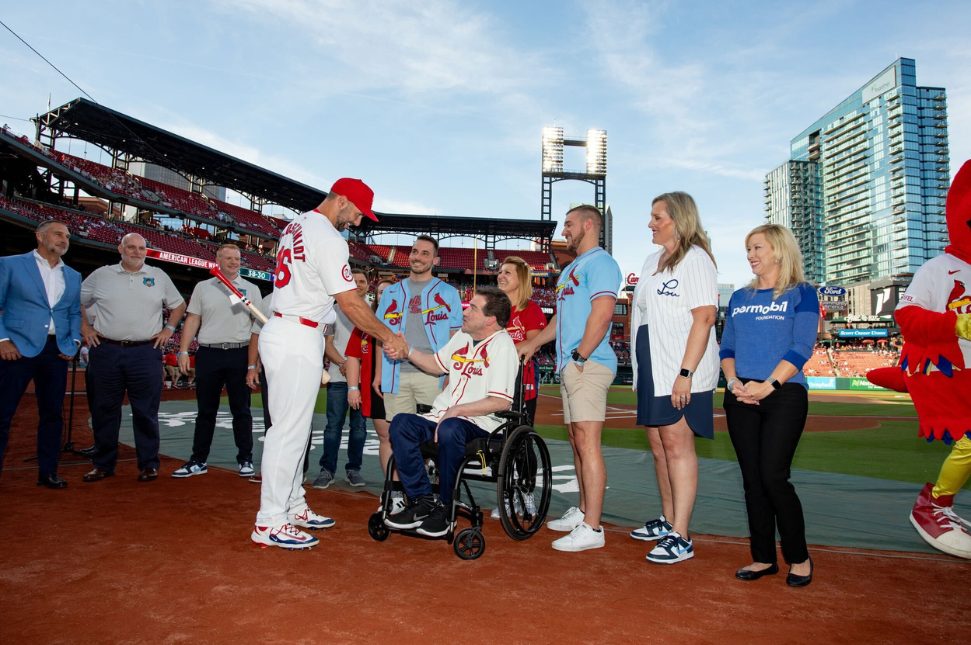
Once again, we honored Lou Gehrig Day with events and initiatives that brought our brotherhood together to celebrate his legacy and continue the fight against ALS. Phi Delta Theta would like to thank those who came to this year’s Lou Gehrig Day events. Your support is making a difference in the world of ALS. These heartfelt moments and celebrations across various ballparks highlight the enduring impact of Lou Gehrig’s legacy and the collective efforts to combat ALS.
$1 Million Gift to Expand Educational Programming
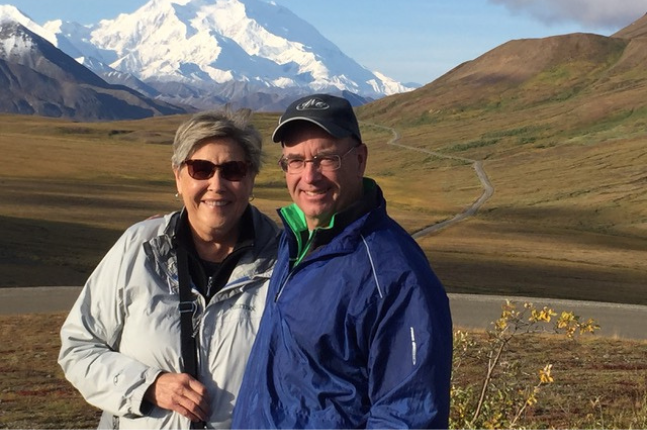
The Phi Delta Theta Foundation has received its third-ever $1 million donation from a living donor. Phi Delta Theta member Mark Craig, Colorado State ’71, and his wife Shirley are two retired public servants. Passionate about education and shaping new leaders, this contribution represents their commitment to supporting the mission of the Phi Delta Theta Foundation.
A gift like this showcases the impact of philanthropy on individuals’ lives and the communities they serve. Mark and Shirley worked as teachers for thirty years, and towards the end of their careers, they observed changes in the education system that raised worries about the future of education. Additionally, they noticed a decline in leadership opportunities and wanted to create something that would inspire a lifelong passion for learning and leadership in students.
Record-Breaking Scholarships and Support
This year, Phi Delta Theta granted an incredible $1.7 million for scholarships and programs, furthering our mission to support the academic and personal development of our members.
A Certified Great Place to Work
In 2024, Phi Delta Theta General Headquarters was recognized as a certified Great Place to Work for the second year in a row. This honor highlights the exceptional culture and dedication of the team that drives our mission forward.
Leaving ALS Better Than We Found It
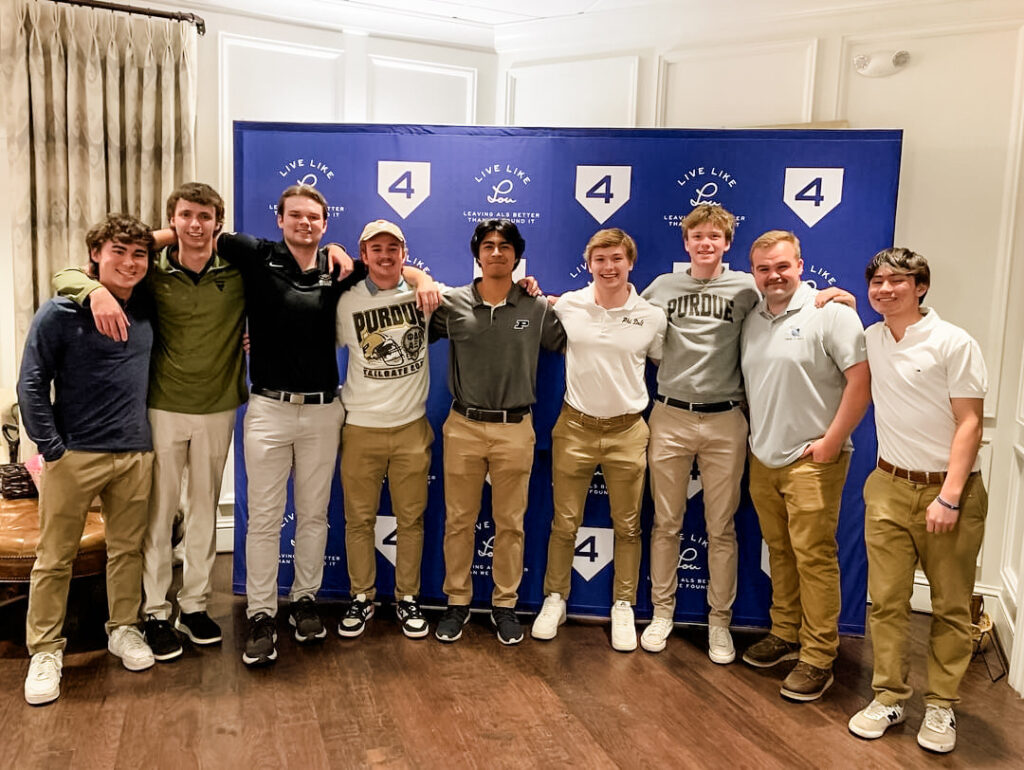
Our chapters collectively raised $1.22 million for ALS research and support through Live Like Lou and Iron Phi in the 2023-24 school year. Additionally, over 650 ALS families registered for our Connect and Serve Program with Live Like Lou. These monumental achievements demonstrate our members’ commitment to supporting the ALS community in memory of Lou Gehrig.
Over 460 New Iron Phis
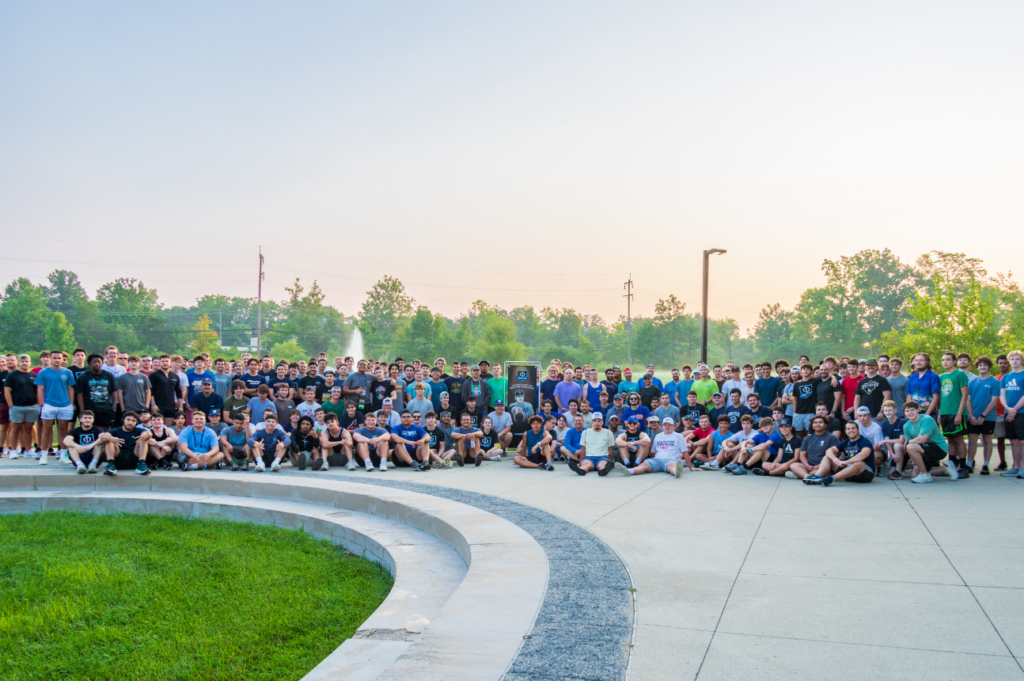
This year, more than 460 individuals became Iron Phis, embodying the spirit of Brother Lou Gehrig, the “Iron Horse,” through their athletic pursuits and dedication to leaving ALS better than they found it. Iron Phi was developed to strengthen Phi Delta Theta and its impact in the fight against Lou Gehrig’s disease. Participants choose a personal athletic endeavor, raise $1,000 through the Iron Phi website, and accomplish their goal—all while joining a community of philanthropists inspired by Gehrig’s durability, perseverance, and never-give-up attitude.
Transmit Greatness: Recruiting the Next Generation of Phis
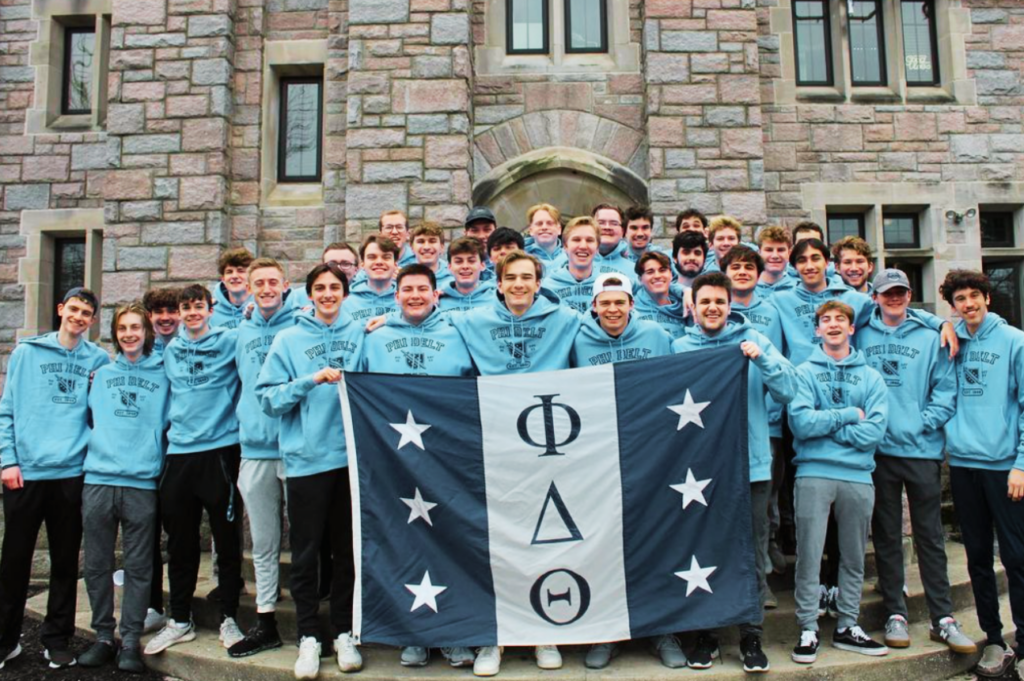
Our “Transmit Greatness” initiative focused on engaging and inspiring the next generation of Phi Delts. By sharing the Fraternity’s values and vision, we successfully connected with potential members who are ready to uphold our legacy.
A Record-Breaking Kleberg Emerging Leaders Institute
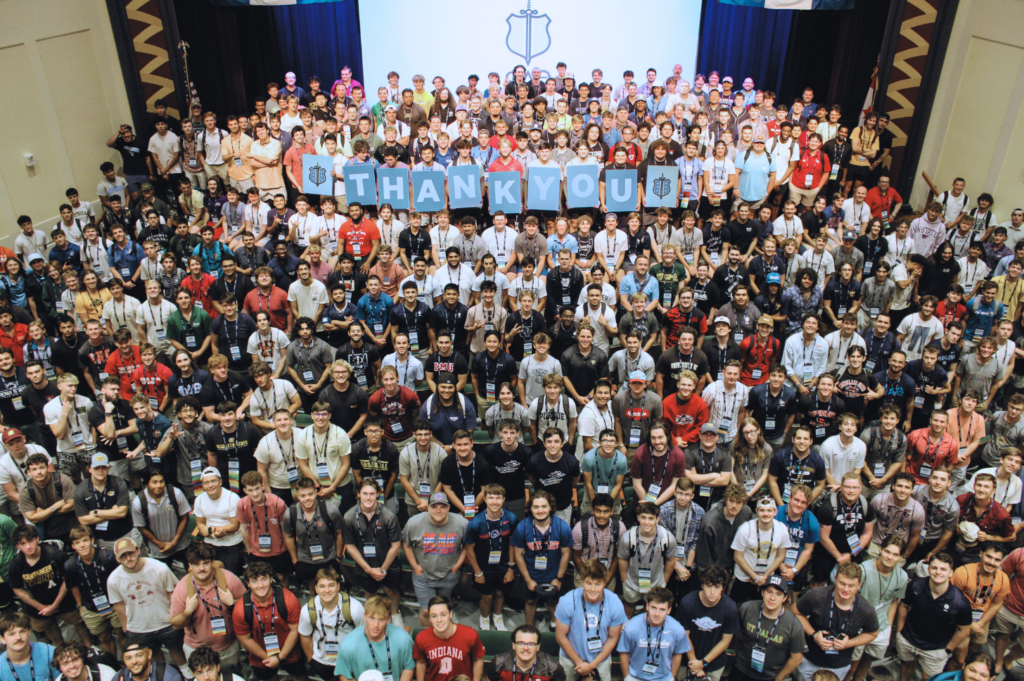
This year’s Kleberg Emerging Leaders Institute saw historic participation and scholarship milestones. With over 1,000 brothers in attendance, the event was a testament to the power of our shared vision and commitment to leadership excellence.
Standing Up Against Hazing
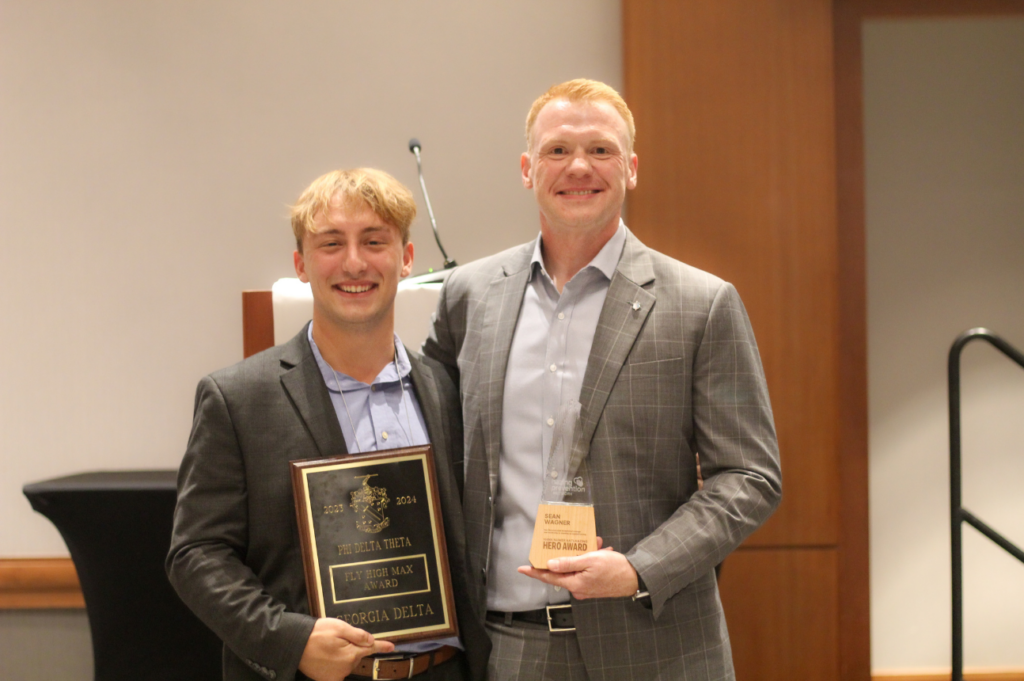
Phi Delta Theta’s anti-hazing efforts were recognized at a national event in Atlanta, reinforcing our dedication to fostering a safe and supportive environment for all members. Phi Delta Theta continues championing anti-hazing initiatives across its chapters, promoting education, legislation, and advocacy to create lasting change. The event was a powerful reminder of the Fraternity’s dedication to fostering a brotherhood built on respect, safety, and mutual support, reinforcing its ongoing mission to lead the way in eradicating hazing.
Giving Back on Giving Tuesday
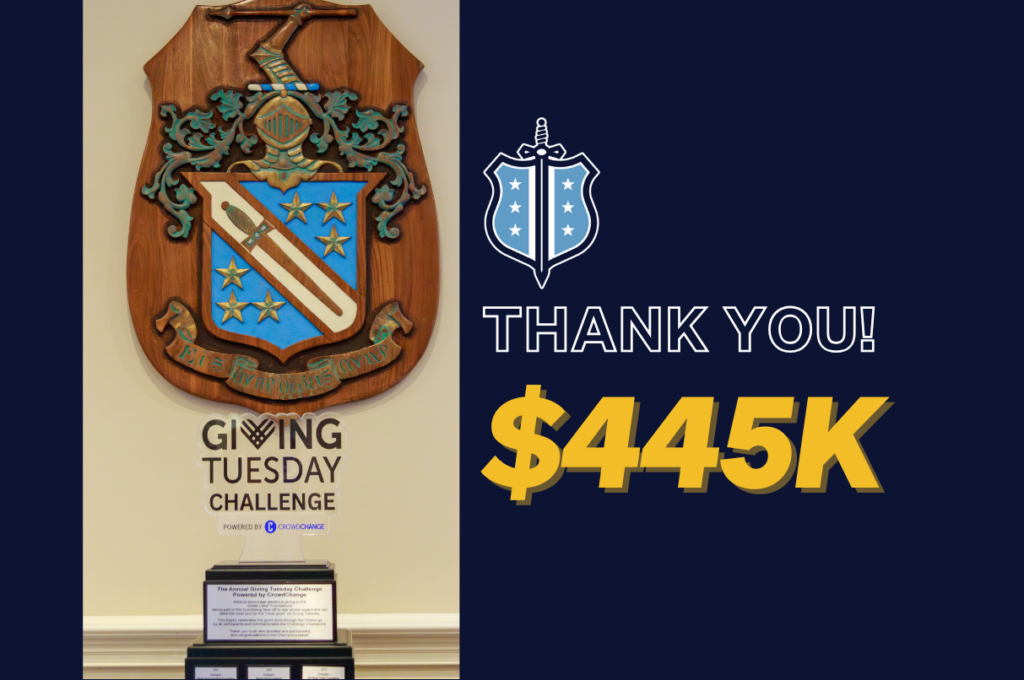
The Interfraternal Giving Tuesday Challenge is a friendly competition between fraternity foundations to see which organization can rally the most engagement and raise the most for its foundation. Phi Delta Theta accepted the challenge, hoping to reclaim victory and make an even larger impact on the brotherhood.
In twelve hours on December 3, 2024, 650 Phi Delta Theta supporters raised a tremendous $445,861, surpassing our goal of $250,000 for the the Phi Delta Theta Foundation.
Senate Passage of the Stop Campus Hazing Act
Phi Delta Theta proudly celebrates the recent Senate passage of the Stop Campus Hazing Act, a critical step in the fight against hazing. This legislation, designed to strengthen federal hazing prevention efforts through improved data collection and transparency, is now headed to the President’s desk for signing into law.
The Stop Campus Hazing Act requires each institution of higher education that receives federal student aid to maintain and update biannually a website page that discloses student organization violations of the institution’s code of conduct that threaten the safety of students. The report would detail the corrective measures imposed by the school on the student organization. This would allow students and parents to make more informed decisions about which student organizations are safe to join.
As we look forward to 2025, we remain committed to growing our impact, supporting our members, and honoring the values that define Phi Delta Theta. Thank you to everyone who made 2024 a year to remember. Here’s to continuing our legacy of greatness!
The post Reflecting on a Remarkable 2024: A Year of Growth, Impact, and Brotherhood appeared first on Phi Delta Theta.
]]>The post Seven Phis Chosen to Represent Fraternal Government Relations Coalition in DC appeared first on Phi Delta Theta.
]]>
The Fraternal Government Relations Coalition (FGRC) is a collaborative effort between the North-American Interfraternity Conference (NIC), National Panhellenic Conference (NPC), Fraternity/Sorority Political Action Committee (FSPAC) and Fraternity and Sorority Action Fund (FSAF). The FGRC represents ninety-two single-gender fraternities and sororities nationwide with more than 800,000 undergraduate members at 9,500 chapters on 700 campuses, as well as more than 9.1 million alumni. The NIC and NPC set and execute the advocacy agenda for the FGRC and directly lobby Congress.
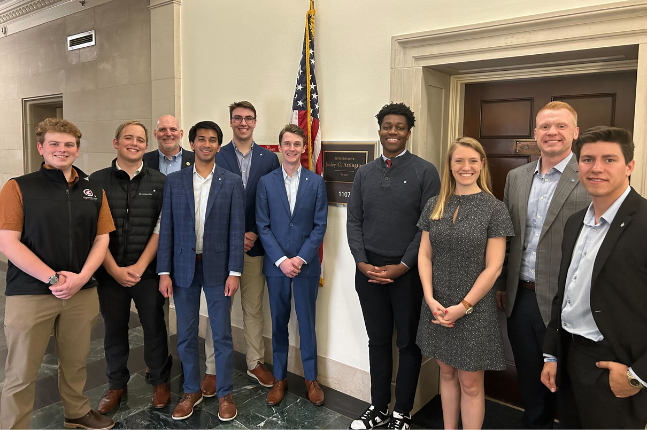
Last winter, the FGRC asked Phi Delta Theta to find outstanding campus leaders to participate in the Capitol Hill Visits in Washington, DC. The Fraternity is proud to report that Phi Delta Theta had the most representation with seven members chosen to meet with lawmakers and/or their staffs. The purpose was to advocate for government relations platforms developed by the National Panhellenic Council and the North American Interfraternity Conference.
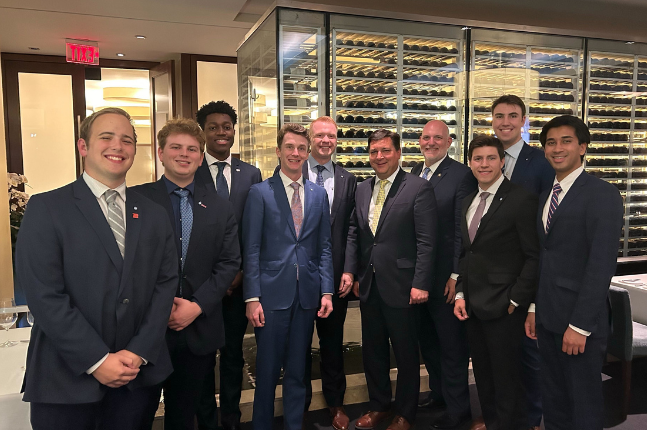
These brothers had the incredible opportunity to meet with lawmakers to advocate for government relationships platforms alongside other Greek leaders from the National Panhellenic Council and the North American Interfraternity Conference. They were also fortunate to meet with fellow Phi Delta Theta members Senator Jim Risch, Idaho ’65, and Congressman David Rouzer, NC State ’94.
Representing the voice of our community was an honor, and I am incredibly grateful to Phi Delta Theta Fraternity for selecting me for this impactful opportunity. A major highlight on this visit was getting to speak to the staffers of these offices about anti-hazing policy. At least one student a year dies from hazing on a college campus. It was a full circle moment to have worked with my chapter over the years to host our annual anti-hazing event at Montclair to today, working to enact meaningful change across the US that can save lives. By championing legislation against hazing, we’re taking a stand to promote a culture of accountability, empathy, and mutual support within our university communities. Another great part of this visit was getting to meet Phis from all over the country. It’s so interesting to hear of other brothers’ experiences in their chapter and it was such an amazing team to work with. This was definitely also an amazing learning experience as an undergraduate who hopes to work in public service or policy, and having an opportunity like this has been invaluable.
Richard Steiner-Otoo, Montclair ’24
Being able to represent Phi Delta Theta and FGRC on Capitol Hill was such an enjoyable experience. We got to speak to representatives from all over the country about issues that greatly affect our community. I was very proud to learn how many Phis we have on Capitol Hill, it gave me great pride and inspiration to pursue my professional goals.
Austin Lauziere, UCF ’24
The opportunity to go to Capitol Hill with Phi Delta Theta brothers from around the country is something I’ll truly never forget. I learned the impact I can have by showing up and articulating my unique experiences to those with the power to enact change. Getting to meet and have a wide-ranging yet substantive conversation with Senator Risch was an incredibly special experience for me as not only a member of Phi Delta Theta, but also a lifelong Idahoan.
Cayden Stone, Boise State ’26
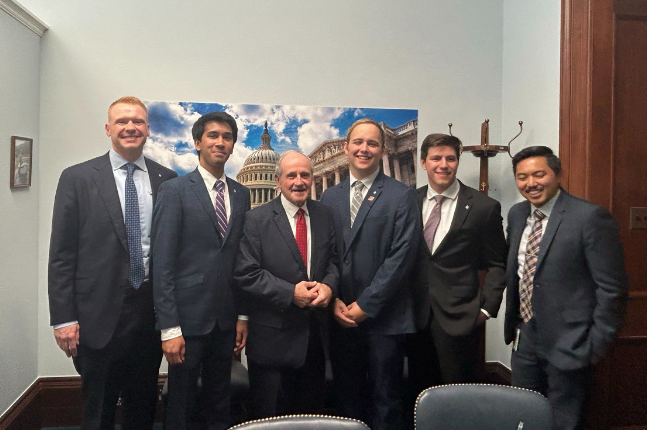
It was an honor to represent Phi Delta Theta in Washington DC with my Phi Delt brothers, but also our brothers and sisters of the greater fraternal community. I won’t forget this experience for a long time to come, and hope it only gets outdone by my future activist work in DC.
William Bechtel, Illinois ’23
The post Seven Phis Chosen to Represent Fraternal Government Relations Coalition in DC appeared first on Phi Delta Theta.
]]>The post World-Renowned Surgeon, Dr. Robert Salem, Texas Tech ’50, Texas Epsilon Chapter’s newest Phi appeared first on Phi Delta Theta.
]]>While a student, Salem was a member and president of the Silver Key social club in the 1940s, which later became affiliated with Phi Delta Theta in 1953. By then, Dr. Salem was in Dallas finishing his medical degree at Southwestern Medical School.
Silver Key Certificate of Membership
In late 2020, Phi Dr. Rob Schmid*, Texas Tech ’93, a plastic surgeon in Lubbock, visited a small museum dedicated to Dr. Salem at the local Covenant Hospital. To his surprise, hanging in the museum was Dr. Salem’s certificate of membership in Silver Key.
He soon after asked Dr. Salem if he was indeed a member of Silver Key, to which he replied, “member?! I was the president of Silver Key 1949-50!” Dr. Schmid notified Dr. Rob King, Texas Epsilon chapter advisory board chairman, of his discovery and through the efforts of Dr. King, Dr. Bill Dean, and the chapter advisory board, permission was obtained from General Headquarters to initiate Dr. Salem.
At 92, Dr. Salem became Brother Dr. Salem and signed the Bond of Phi Delta Theta, Bond Number 3026.
*Important Note: Dr. Rob Schmid was a 1992 Arthur R Priest Award recipient and his son, Preston Schmid, a fourth-generation Texas Tech Red Raider, is a third-generation Texas Epsilon Phikeia!
About Dr. Salem, Just Initiated and Recently Posted Famous Phi
Dr. Salem was given a deferment from military service in the early 1950s with the obligation of serving a tour in the military after he finished
He has then commissioned a first lieutenant in the U.S. Air Force Medical Corps and was assigned to Fitzsimmons Army Hospital in Denver. When the internship ended, Salem was assigned overseas to the U.S. Air Force Hospital at Orly Airfield, Paris.
Later, he did a residency under Dr. Michael DeBakey, a world-famous heart surgeon, and pioneer in the field. When he entered his own surgical practice in Lubbock, his intense training and the particular talent that characterized his own work, began to save lives on the South Plains. And other surgeons were calling him for life-or-death emergencies in operating rooms. (Lubbock Avalanche Journal)
On May 11, 1970, Lubbock, Texas was hit by an F-5 tornado that caused widespread destruction and injuries. Dr. Salem was called into the hospital and operated for 24 continuous hours on patients.
He pioneered peripheral vascular surgery in West Texas and performed the first abdominal aortic aneurysm surgery in West Texas in 1962. He was a senior and founding member of SWAT Surgical Associates in Lubbock in 1962.
Dr. Salem was the founding chair of, Department of Surgery at the Texas Tech University Health Sciences Center in 1972. He developed the first trauma program at Methodist Hospital (now Covenant Hospital) in 1992 and developed the Children’s Open Heart Surgical program at Covenant Hospital.
In 1975, the Robert J. Salem. MD Award for Excellence in Surgery was established by the Texas Tech University School of Medicine. Salem received Texas Tech’s Distinguished Service Award in 1977.
He received the Larry King Cardiac Foundation’s Physician Laureate Award in 2012 and was named a Distinguished Alumnus by Texas Tech University in 2013.
The Robert J. Salem, M.D. Historical Collection was opened and dedicated by Covenant Health System in August 2010. The museum is located in the hospital’s lobby.
Dr. Salem is now a brother in the Bond thanks to a Silver Key certificate hanging in that museum.
The post World-Renowned Surgeon, Dr. Robert Salem, Texas Tech ’50, Texas Epsilon Chapter’s newest Phi appeared first on Phi Delta Theta.
]]>The post Past President of the General Council Dr. Charley Pride Honored For Long-Term Commitment To The Greek Community appeared first on Phi Delta Theta.
]]>Dr. Charles Pride is the Director of Student Activities and University Center at Western Kentucky University. His experience in student affairs began with his recipe of a B.A., M.A. and Ed.S. from Western Kentucky University. He later earned his Ph.D. in Educational Administration from the University of Louisville. Charley’s fraternity and sorority history of engagement and advocacy is expansive, and includes volunteer roles, including General Council President for Phi Delta Theta Fraternity. Charley has also served as Undergraduate Interfraternity Institute (UIFI) faculty, a five-time Southeastern Panhellenic Conference Region Advisor, and a three-time Southeastern Interfraternity Conference Area Advisor. For his contributions to the field over his career, Charley has been awarded Sigma Nu’s Greek Advisor of the Year Award, a Kappa Alpha Order Appreciation Award, the Jane H. Sutton Advisor of the Year Award, and an Order of Omega Fellowship.
Brother Pride will receive the award at the AFA Annual Meeting in Fort Worth, Texas on Saturday, December 5.
The post Past President of the General Council Dr. Charley Pride Honored For Long-Term Commitment To The Greek Community appeared first on Phi Delta Theta.
]]>The post Phi Delta Theta Honors Indiana Kappa (Ball State) Phi Bob Roberts With The Legion of Merit Award appeared first on Phi Delta Theta.
]]>Brother Robert P. Roberts, Jr. was initiated into the Indiana Kappa Chapter at Ball State University on May 21, 1971. After graduation, he joined the Phi Delta Theta Headquarters staff as a traveling Leadership Consultant for two years from 1975 to 1977. Soon after, Bob was appointed President of Kappa North Province, overseeing chapters in Indiana until 1991. Brother Roberts has dedicated more than 25 years as a volunteer to the Fraternity, and he has been serving on the Housing Commission since 1998.
Bob has been in the financial services industry for more than 25 years, receiving numerous professional awards, while fulfilling his clients’ financial needs. A longtime resident of Indianapolis, he has been involved with Cathedral High School and Ball State University, and is active at St. Luke Catholic Church and Holy Family Community. Bob and his wife Deborah have been married for over 25 years and have five children: Rachael, Robert III, John, Rose and Kathleen.
For his lifelong dedication and commitment to Phi Delta Theta, the Fraternity is proud to honor Brother Robert P. Roberts, Jr. with the Legion of Merit.
The post Phi Delta Theta Honors Indiana Kappa (Ball State) Phi Bob Roberts With The Legion of Merit Award appeared first on Phi Delta Theta.
]]>The post Secretariat Wore Azure & Argent? appeared first on Phi Delta Theta.
]]>In October 2010, Phi Delta Theta’s azure and argent raced across the big screen in movie theatres when the film Secretariat starring Diane Lane and John Malkovich and produced by Walt Disney Studios was released.
The film tells the story of Penny Chenery, the daughter of Christopher Chenery, Washington and Lee 1909, owner of Virginia-based Meadow Stables who takes the reins from her father after he falls ill in the early 1970s – despite her lack of horse-racing knowledge. Thanks to the help of veteran horse trainer Lucien Laurin, Chenery navigates the male-dominated sport and produces the first U.S. Triple Crown winner in 25 years. The film was inspired by an incredible true story and suggested by William Nack’s book Secretariat: The Making of a Champion.
While the story of Secretariat is familiar to many as he was an icon in the 1970’s, gracing the cover of such publications as Time, Newsweek, and Sports Illustrated, many don’t know the reason for his trademark colors of blue and white.
Brother Christopher Chenery was born and raised in Ashland, Virginia and attended both Randolph Macon and Washington and Lee College, where he was initiated into Phi Delta Theta and graduated in 1909 with a Bachelor of Science in Engineering. After serving with the United States Army Corps of Engineers in World War I and establishing the Chenery Corporation, he purchased the Meadow Stables in 1932 near his childhood home in Virginia.
According to Alan Chenery, Jr., Randolph Macon ’50, Christopher’s nephew, not long after the stable was purchased the colors were to be selected. Christopher was a proud Phi Delt and came from a family of Phis so when he was to make this decision he gathered his two fellow Phis,“blood brothers” and ranch “side advisers” Alan Sr. and William who were Phis from the Virginia Gamma Chapter at Randolph Macon. The Brothers Chenery decided that the horses from Meadow Stables would wear the same colors of their beloved Fraternity, blue and white. From then on, all horses including the 1950 Horse of the Year, Hill Prince, and the storied stallion Secretariat wore those colors.
Phi Delta Theta has yet another Triple Crown Connection as the 1946 Triple Crown Winner, Assault, was foaled at the King Ranch in Texas, a farm that primarily raised cattle. The Triple Crown Ranch was owned and operated by King Ranch. Tio Kleberg, Texas Tech ’69, Trustee Emeritus of the Phi Delta Theta Foundation, is the great grandson of its founder, Richard King, and continues to serve on the King Ranch’s board of directors.
The post Secretariat Wore Azure & Argent? appeared first on Phi Delta Theta.
]]>The post Loyalty: What I Learned Interning For Phi Delta Theta appeared first on Phi Delta Theta.
]]>As a senior at Miami University, I am aware that my time here is limited. I look back and reflect on how I spent my time. I have worked with and been a part of so many amazing organizations, and with so many opportunities available on campus, I am forever grateful that I decided to intern for Phi Delta Theta’s General Headquarters during the first semester of my senior year. As a member of Kappa Alpha Theta and a former Greek Life Guide, I knew I wanted to continue to be involved in the Greek community. The internship offered at GHQ allowed me to do so, while also enhancing my non-profit experience and gaining knowledge in the field of communications.
Serving as the communications intern at GHQ has taught me many valuable lessons. Not only did I learn how to write press releases, news items, and full-length articles, but I also learned the importance of professionalism, punctuality, and thoroughness. I will take all of these skills with me when I graduate and seek to enter the professional world. However, there is one major principle that I took away from this experience – the importance of loyalty.
I was always aware of loyalty as a member of Kappa Alpha Theta. Serving as music chair for my sorority taught me importance of ritual, and how this ritual bonds a group of individuals together. I knew it was important to attend chapter meetings, participate in service activities, and to always strive to be the best version of myself. However, after looking at the Greek community from a different perspective, I realized the extent to which this unconditional devotion builds an organization.
The current members and alumni of Phi Delta Theta, as well as some of my non-member colleagues, have shown me what it means to be truly loyal to one another. I was fortunate enough to receive the opportunity to interview leaders from Phi Delta Theta chapters around the country. Half a dozen men were kind enough to answer questions I asked them about setting and achieving chapter goals. The answers they provided were insightful and thought-provoking. They, along with so many other leaders in this organization, proved to me the quality and nobility of Phi Delta Theta. Loyalty comes in many different forms. Alumni, ritual, service, and leadership are just a few of the ways that I have personally seen the loyalty of the members of Phi Delta Theta. This has inspired me to take what I learned back to my sorority and encourage our members to make every effort to be the best that we can possibly be.
It is a breath of fresh air to have worked with an organization filled with so many honorable people. Even as a non-member of the Fraternity, I was welcomed with open arms into the Phi Delta Theta community. I am eternally grateful for this experience.
The post Loyalty: What I Learned Interning For Phi Delta Theta appeared first on Phi Delta Theta.
]]>The post Five Do’s & Don’ts As A Kleberg Emerging Leaders Institute Attendee appeared first on Phi Delta Theta.
]]>The time is almost here for the 25th anniversary of the Kleberg Emerging Leaders Institute. While the name has changed over the years from Leadership College to the Emerging Leaders Institute to the Kleberg Emerging Leadership Institute, the purpose of the conference has remained the same – to equip undergraduate leaders within Phi Delta Theta with the necessary education and tools to succeed.
If you’ve been selected to attend the conference, congratulations! Less than 5% of Phi Delta Theta’s members have attended the conference. The experience has the opportunity to become a very valuable one, IF you approach the conference with a few things in mind.
That’s what this post is about – Things to do and things not to do in regards to the Kleberg Emerging Leaders Institute.
Things To Do:
Come into the conference with a positive attitude and open mind
The majority of conference attendees will be very excited to be there, because they are honored to have been selected by their peers as an emerging leader. Some, however, may have been told by their peers that they drew the short stick. The individuals who fall into the former category will come to the conference with an open mind. Those in the latter category will more than likely not. Be aware of this and do not let the close mindedness of a few distract you from your eagerness to learn. You will have the opportunity to learn a great deal from some of the Fraternity’s brightest and most dedicated volunteer and staff members. Be a sponge and allow people to pass along what they know. The experience that will be in Oxford for the conference will be impressive.
Explore the Phi Delt history in Oxford
This may be your only trip to Mother Oxford. Do a little research on our history and be aware of the many pieces of Phi Delt history on campus. In your free time, take some time to look around and experience this very special campus and town. If you’re a Foursquare user, we’ve made it easy for you to see the landmarks. Visit https://foursquare.com/phidelt/list/phi-delta-theta-landmarks-in-oxford-ohio.
Pick the brain of your volunteer faculty member
The volunteer facilitators for the conference have been selected from a large pool of applicants. They have been selected for a reason. Each one of them brings a love for Phi Delta Theta, unique experiences, and knowledge covering many Fraternity topics. Take the time to get to know your faculty member and ask them questions. Also, meet many of the faculty members, as you can learn much from each of them. These individuals want to see you succeed and will more than likely be of mentorship to you as you progress through your Phi Delt Career. That is, if you allow them to help you.
Participate in everything
You have a little more than two days to soak in as much as you can. To do so, take advantage of everything that is going on. Be at every small group chapter meeting, attend an educational session in all three blocks, show up at the Iron Phi 5K and Iron Phi Sports competition, and most importantly, be present when you’re at these thing. Simply put, ask questions and be an active participant in every discussion. Yes, you will have long days, but embrace them as opportunities to learn more.
Connect with fellow undergraduates and alumni
Creating a support network with people outside of your campus can be extremely valuable during your time as a leader within Phi Delta Theta. Having an outside perspective or a peer in a similar situation or position can assist you in your efforts to do great things at your chapter. Get to know the brothers in your Kleberg chapter, eat lunch with new people everyday, strike up conversations with as many people as you can.
Things Not To Do:
Take every idea as a good one
You will hear countless ideas throughout your time at Kleberg. Some of them will be very good, some of them will be very bad. When you do hear a bad idea, call people out and hold them accountable. We are our brothers’ keepers and it is our responsibility to address the negative things that occur within our organization. Those who continually want to talk about their “traditions” are generally the ones that you should take with a grain of salt.
Only hang around your fellow chapter brothers
You may have fellow brothers from your chapter in attendance with you. You’ll get to spend all year with them. Branch out from your comfort of your chapter and meet others. Valuable relationships will be built if you take this route. Make sure different brothers from your chapter are attending different educational sessions. It doesn’t make sense for all of you to be in one session, when there are five others occurring.
Stay silent
You will gain more from your Kleberg experience if you actively participate. Discussions within your small groups are confidential and we want you to feel comfortable talking about your frustrations, sharing your successes, and getting the answers to things you are trying to learn.
Go into the conference without a focused list of things you want to learn
To build upon the last bullet, don’t go into the conference without a plan. What are some of the topics you want to learn about? What things would be valuable for your officer position or one that you one day hope to have? Knowing the things that you want to get out of the conference will help you navigate it.
Think you’ll be able to change everything immediately upon returning home
Leaving the conference, you will be equipped with the knowledge to make positive change. Having said this, you’ll need to focus on a strategy to implement this change. If you try to improve everything at once, you’ll have a difficult time. If you strategically select 1-3 things to start on, you’ll have more success.
The Kleberg Emerging Leaders Institute is a powerful experience, and we know you will enjoy it. Keep these do’s and don’ts in mind to make the most of your time in Oxford.
See you soon.
The post Five Do’s & Don’ts As A Kleberg Emerging Leaders Institute Attendee appeared first on Phi Delta Theta.
]]>The post Words of Wisdom from Past Chapter Presidents appeared first on Phi Delta Theta.
]]>Leave time to focus on yourself.
Learn as much as you can from your alumni.
Reports are important, chapter meetings are important, paperwork is important, BUT the most important thing is brotherhood. You can’t make it happen, it has to come organically from other brothers bonding and connecting. Give them that opportunity whether it’s a group dinner, lunch, pick-up sports etc., and let the magic happen! Don’t push it, but just extend the invitation with a smile!
Set goals early and keep the bar high.
“This is the way we’ve always done it” is an excuse used by single-minded people.
Have FUN!
Take time for yourself. If you can’t take care of yourself, you can’t take care of the chapter.
Enjoy the little things.
Lead by example and practice what you preach.
Separate fraternity and friendship when making decisions.
Be accountable for yourself and all of your brothers. If you tell someone that you are going to do something, stay true to your word and do it.
Do not focus on those people in the chapter who may not be showing up to meetings as much as those that you know have potential. As a leader you cannot turn every person into a leader.
Always have a pulse on all the chapter functions so you won’t be blindsided by anything.
Actively prevent and speak against things that are risky. Don’t be silent.
Be strong in your communications. Make an effort to communicate effectively with your CAB.
At the end of the day, it’s just a group of college kids. Make sure to keep your cool even when you are getting frustrated.
Be aware of all GHQ, IFC, and university rules and risk management policies.
Be prepared to say no to some of the guys in the chapter and do the responsible thing instead of the fun thing. Make the hard decision instead of the easy one.
This position is going to be taxing. Know that you’re doing your best and don’t be afraid to rely on others around you (CAB and your exec). Delegation is key.
Always be communicating, especially with less involved members about what can be done better.
Be yourself. Communication is key.
Being a leader isn’t easy. Criticism and praise will be given no matter what you decide to do. It’s what you do with the feedback you receive and how you continue to improve your chapter. In the end have the best intentions no matter what and look to truly become the greatest version of yourself and strive for your chapter to do the same.
Believe in yourself. You need to be able to say no and put your foot down.
Communication is key. It is vital to stay in touch with your CAB, province president, and leadership consultant. In addition, be sure to be open and honest with your members as to what is going on with the Fraternity.
Divide key responsibilities among brothers with strong leadership early on. This promotes growth on their part and keeps any one strong leader from burning out. Have deliverable (reports, events, newsletters, meetings) due for key positions on set dates or intervals of time (weekly, by-weekly, monthly).
Do not procrastinate and follow the chapter greatness checklist.
Don’t be afraid to ask for help from anyone.
Don’t do everything yourself. Find your core officers who you can trust and have them help you a lot. Also, be positive, your attitude is what makes everyone else’s attitudes.
Don’t worry about pleasing everyone. Instead, worry about improving yourself and the Fraternity like you know you should.
Don’t get bogged down with everyone’s complaints. They are adults and can deal with it themselves.
Don’t let the opinions or traditions of the chapter keep you from making the right decision.
Don’t procrastinate and make sure your VP is doing his job.
Don’t take on too much too quickly. You have an executive board that is there to help you.
You have the power to do great things as president. Don’t doubt your abilities. You were elected because people saw something in you.
Focus on yourself and show other positions how to do their jobs instead of doing it for them.
Follow the values of the Fraternity and you will never be misguided.
Follow your gut and make sure to value everyone’s opinion.
Give people the benefit of the doubt and a few chances. Be firm but fair. Follow through on commitments.
Hard work and preparation are essential for running an effective and smooth chapter meeting. YOU and your executive board set the tone for the entire organization. Make it a positive tone of unity not division.
Don’t be afraid to make people upset. Focus on making this chapter better, not making everyone happy.
Have as many individual conversations as you can.
Lead by example. People will follow you when they see you backing up your word. And stay positive. Turn what looks like setbacks into opportunities.
Learn to be political. You could be objectively correct, but if your ideas are unwieldy, you will get nowhere.
Listen to all your members. Be willing to reach out to them to get some input on how they think the chapter is doing.
Most people in the chapter look out for themselves. You have to look for the betterment of the chapter.
Never be afraid to ask for help (even when you think no one else cares), and don’t try to do everyone else’s job.
Pay attention to your chapter and member needs.
Set a calendar and book venues before the semester even starts.
Set the tone early. Make it apparent that you are in charge but be willing to listen to others.
Lean on the most recent president for advice, and don’t get too worried if at the beginning you feel lost.
Stay motivated.
Stay on top of things early and stay organized. Once you get behind it’s hard to catch up.
Stay organized and don’t procrastinate.
Supporting the active members of your chapter should always be your first priority.
Take time to yourself and let the officer positions work for you.
The external side of the job is arguably more important than the internal. Being respected by your chapter matters a lot, but if people outside the chapter don’t respect your opinions and know who you are, your whole chapter will suffer.
Thicken your skin and have 4-5 people to turn to always.
Always remember that you are the face and should carry yourself with respect. Be completely transparent with the information you receive.
Trust your gut and remember that you serve the chapter.
Work closely with the executive board and stay on top of everything.
You have to command respect. It will be hard to yell at your closer friends, but they will respect you more in the long run.
You were elected for a reason so don’t doubt yourself.
Sometimes the right decision isn’t the most popular one.
The post Words of Wisdom from Past Chapter Presidents appeared first on Phi Delta Theta.
]]>The post Celebrate Those Who Come… appeared first on Phi Delta Theta.
]]>She just had 1,000 students at an educational program, and hopefully, they learned something. But, she was focused on the 200 empty seats. Instead of feeling great about the 1,000 students who came and enjoyed themselves, she made the self-defeating choice of focusing on the 200 who stayed home to play video games.
Ladies and gentlemen, it’s time to start celebrating those who come. Stop worrying so much about those who don’t.
As leaders, we naturally wish that everyone valued our efforts. We want complete and total approval of what we do, and it bugs us when we get less than 100% support. You know that you’re never going to please all of the people all of the time, but yet you still beat yourself up by focusing on those who don’t love you.
If you have 100 members in your group, and only 15 show up for a service event, the natural tendency is to get bent out of shape about it. 85 members blew you off, or didn’t see any value in the event. Do they dislike you? Are you doing a bad job? Maybe the work you do just isn’t that important to the members of your organization? You judge your entire contribution to the group based on those who didn’t come.
Instead, focus on the 15 who came. Give them an excellent experience. Make it such a great experience that they go back and make the 0ther 85 wish they had come. At your next meeting, have a couple of them stand up and share their cool experiences. Thank them publicly for giving their time and their effort. Have a smile on your face and exude happiness and satisfaction.
Instead of focusing your energy negatively, focus it positively. This is a choice you make, whether you’re doing it consciously or not.
Next time you do a service event, plan for 15 instead of 100. If 20 show up, even better. Celebrate those who come. The next time, you’ll have 30. It just works that way. People want to do things that they identify as positive. If you’re complaining and feeling negative all the time, why would anyone want to join you for an afternoon of anything?
If you’re the president of a student government or an IFC, for example, stop focusing on those groups who don’t value your council enough to show up. Focus on those who did make the commitment. Reward them with a valuable, interesting, fun meeting. Make them want to come back next time.
The alternative is to fine and penalize the groups who didn’t show up, but that’s the negative leadership route. Instead, give those who came a great experience. Commit yourself to making your meetings more meaningful, positive and interesting. Reach out to those who didn’t come and let them know that they were missed. Tell them the cool things you are planning for the next meeting, ask them if they have any ideas for what they’d like to see discussed, and ask them to join to make good things happen.
Be positive. Stop killing yourself and the morale of your group by focusing on what isn’t there.
I’ll end by telling you a secret. Sure, I like it when there is a full auditorium full of enthusiastic audience members. But, I also really enjoy a group of 20 people who chose to be there in front of me, ready to learn something. Success isn’t in the numbers. It’s not about getting a certain percentage of members to show up. It’s about giving people something of value and celebrating those who show up, ready to learn and be challenged. Better things happen with a small number of committed and interested people than in a room full of people simply avoiding a fine or penalty. Ask any professor. Ask any boss. Ask any preacher.
Give me those who want to be there, and I’ll make them glad they came.
T.J. Sullivan is co-founder and CEO of CAMPUSPEAK. He is a member of Pi Kappa Phi Fraternity. Check out his blog at www.tjsullivan.com.
The post Celebrate Those Who Come… appeared first on Phi Delta Theta.
]]>