The post Brotherhood in Action: Leading Mental Health Conversations During National Suicide Prevention Week appeared first on Phi Delta Theta.
]]>By: David J. Kovacovich, Arizona State ’97
Membership in Phi Delta Theta Fraternity means accepting a multitude of responsibilities on our journey to becoming the greatest version of ourselves. We prepare our members to differentiate themselves when entering the professional world, respect the communities that host them, and develop a moral compass to guide them through life’s challenges.
Our primary purpose, however, lies in being our brother’s keeper. While character strengthening and professional purpose prepare us for the future, our day-to-day responsibility is to ensure that every member of our organization feels genuinely protected in celebrating their individuality among the collective. Never is the premise of being our brother’s keeper more important than during National Suicide Prevention Week.
I am not a mental health professional. You’ll see a multitude of statistics published this week to validate the importance of mental health awareness. The intent of this post is simply to speak to each of you, brother to brother and person to person.
I joined Phi Delta Theta in 1992, a time when college-aged men saw vulnerability as a sign of weakness. Our primary duty to one another was to help divert feelings of vulnerability. It worked!
Today, our members have access to a plethora of resources for engaging in important conversations regarding mental health without feeling lesser for doing so. Our chaplain program has enabled growth in support for the mental health team and created a pathway to difficult conversations guided by brotherly support.
As an alumnus volunteer leader, my obligation starts with our undergraduate membership. I have dedicated thirty years of my life to assisting our college-aged members because I recognize the elevated character these young men bring to our Fraternity.
As a parent of a college-aged man, I cannot think of anything more valuable than sending my son off to a campus far from home to be welcomed by a society like Phi Delta Theta that provides instant human support in abundance. With the social challenges our children experienced during the COVID-19 pandemic, the overuse of screen time, and the collective discourse on differing social awareness, there has never been a more important time for fraternity life! There is no greater reassurance as a parent than knowing that my son is under the care of like-minded individuals, experienced in campus living. This is the true meaning of brotherhood.
During this week of mental health awareness, many resources will be brought to your attention. Simply being present for your brothers is a great first step. I have been fortunate enough to lead Phi Delta Theta’s Shaffer Honors College of Leadership for eleven years. Part of our programming involves active participation of members in peer groups to start open, honest, and transparent conversations involving seldom-spoken topics, including mental health. Starting the conversation at every chapter is key to inviting transparency and allowing our members to express themselves, especially in times of personal strife.
Programming is important. The resources are there for you, but we are all emotionally intelligent enough to understand when a brother is experiencing an unspoken challenge. Extending the olive branch of support to that individual is the first obligation of our brotherhood. We come together for the good of humankind, lending support as part of our membership privilege.
As we embark on another academic year, perhaps the greatest contribution you can make to your university community is being bold enough to simply engage any student in friendly conversation. It may be all they need to divert their personal struggle.
Be your brother’s keeper and lend your support to everyone on your campus!
Phi Delta Theta holds the health and safety of its members in the highest regard. Additional mental health resources are available in myPhiDelt. Together, we can be our brother’s keeper.
If you are in a crisis and need immediate support, please call or text 988 or TALK to 741741.
The post Brotherhood in Action: Leading Mental Health Conversations During National Suicide Prevention Week appeared first on Phi Delta Theta.
]]>The post Fostering Mental Health: Being Your Brother’s Keeper appeared first on Phi Delta Theta.
]]>By: Joshua M. Parker, Kettering ’26
In a world that moves so quickly and is busy with the hustle and bustle of work, classes, and extracurriculars, it becomes easy to push mental health aside and keep moving forward. We tend to overexert ourselves and go past the point of burnout to keep up with our responsibilities, only to realize, long after the breaking point, that we are mentally drained. This pattern often occurs when people have a struggle or stress point in their lives, and instead of pausing and taking the time to address the issue, they pile on loads of work to distract themselves. This is a painful process, not only to endure but also to witness.
At the Phi Delta Theta Michigan Delta Chapter at Kettering University, we recognize the profound importance of mental health not only in our personal lives but also in becoming the greatest version of ourselves. As Mental Health Awareness Month is upon us, I wanted to share one of the practices that our chapter has implemented that fosters an open dialogue about mental health. Most people who struggle with mental health feel as though they are alone. Despite being surrounded by brothers and those supporting them, some still think breaching the topic is taboo. To ensure that every member of our chapter knows they are loved and cared about, I individually approach each house member over the semester and open a private dialogue with them. It does not have to be intense, but the intent is that each member knows they have an outlet and someone who cares about them. The conversation can be as long or as short as the brother wants it to be, but my goal is that every brother has at least one opportunity every semester to have a one-on-one conversation about their mental health. I am not a licensed therapist and not perfect, but sometimes it helps to talk through your struggle with someone else. I consider it an honor and a privilege if I can be that listening ear that allows a brother to slow down and reflect on their mental health or be the person who is there when a brother is struggling.
In addition to the check-ins, we have implemented hosting mental health hours every week. I set aside at least one hour per week to be available to anyone who wants to talk. I usually wait in a private common area; if anyone comes in, we close the door and talk. Again, it’s as formal or informal as someone wishes, but it is just another way for the membership to know that they are cared for and that their mental health matters.
Mental health check-ins and hours are two great ways to promote mental health among brothers, but the activities are not the goal. Mental health is not just one person’s responsibility but the entire chapter’s.
The post Fostering Mental Health: Being Your Brother’s Keeper appeared first on Phi Delta Theta.
]]>The post Ohio University Phi Creates Campus’ First-Ever MENtal Health Week appeared first on Phi Delta Theta.
]]>Seth Totten, Ohio ’25, sought to transmit what he had learned from the Phi Delta Theta Foundation-funded 2023 Kleberg Emerging Leaders Institute to create a campus-wide event to promote mental health in young men. A Chaplain Track participant, Seth was inspired by the topics of diversity and inclusion and mental well-being. He took what he learned to create a new culture of mental health and diversity and inclusion within his chapter and campus community.
“If I didn’t go to Kleberg, there’s no way that I could have stepped up to be the president I needed to be. It helps build the skills that you don’t know you need to have,” Totten said.
According to a recent Kaiser Family Foundation-CNN poll, 90 percent of Americans believe that our country is undergoing a mental health crisis. This crisis is particularly profound among young people. Roughly a third of young adults (ages eighteen to twenty-nine) describe their mental health as “only fair” or “poor” compared to 19 percent of adults over thirty. Fifty-two percent of young adults also report feeling anxious “often” or “always,” whereas only 28 percent of adults over thirty report similar levels of anxiety. Overall, a little more than one in three young people say a mental health condition has made them “unable to work or engage in other activities.”[1]
Phi Delta Theta is not immune to the mental health crisis, but we continue to remind brothers of the hard work of being our brother’s keeper, working to ensure that all of our members have the support systems they need to thrive in college and beyond.
“There’s a lot of societal pressure for men to not talk about mental health, and there’s not a lot of emphasis around men receiving help,” Totten said.
Seth decided to take Be Your Brothers Keeper a step further, opening it up to every brother of every fraternity at Ohio University by creating the campus’ first-ever MENtal Health Week, which was hosted March 25-29, 2024. In partnership with the FSL office, Seth created this week-long program highlighting mental health resources for college-aged men, referencing what he learned from the Kleberg Emerging Leaders Institute. Here is what the week looked like:
Monday: A speaker from Ohio University’s Office of Counseling and Psychological Services spoke to members of the IFC discussing the resources available to students, both on and off-campus.
Tuesday: An all-Greek LGBTQ+ seminar.
Wednesday: An open forum discussion hosted by Seth and IFC executive officers with activities. One of the activities was one that Seth learned from Kleberg, the ‘Tree of Life,’ a psychology exercise based on the idea of using the tree as a metaphor to tell stories about one’s experiences.
Thursday: A Be Your Brother’s Keeper pledge in the student union, where students could sign a banner to promise to be there for their brothers in times of need.
Friday: A social event called Fridays are for the Boys where students could relax, recharge, and connect with members of the IFC community with games, tv, and pizza.
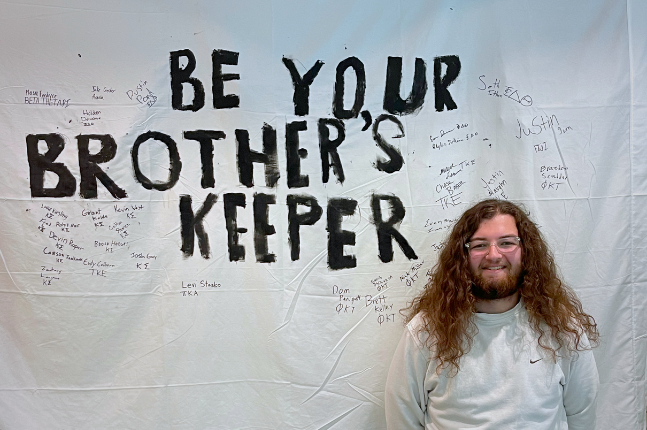
Seth thanks several Phi Delta Theta alumni volunteers for helping with the creation of MENtal Health Week, including Chapter Advisory Board Chairman Chris Quolke, Ohio ’09, Fraternity Chaplain Rev. Michael J. Schulte, Westminster ’14, and Diversity and Inclusion Commissioner Austin A. Deray, Mercer ’10. Seth also attributes a huge help to Ohio University’s Director of Sorority and Fraternity Life Chris Medrano Graham.
The post Ohio University Phi Creates Campus’ First-Ever MENtal Health Week appeared first on Phi Delta Theta.
]]>The post Letter to My Younger Self: Jason Fitzer, Chico State ’08 appeared first on Phi Delta Theta.
]]>What does it mean to be a man? What is masculinity? Looking back twenty years ago to starting college, I would share the following thoughts with my younger self.
Am I enough? I know this is a question you’re thinking about often right now, especially now that you are not living at home and are embarking on your college journey. The most important thing I would tell you is that you are enough. One of the ways you might think you are not enough is because you are comparing yourself to other guys, but doing so will not give you any of the answers you seek.
Theodore Roosevelt once said, “Comparison is the thief of joy.” Comparison is natural and happens every day. You will compare yourself to others on campus, to people on the TV, or to how you think people are describing masculinity. You may not think so right now, but trust me, you should not compare yourself to any ideals of masculinity except your own. You should think about what you believe masculinity means. You are not less of a man just because you focused on school and not sports.
Masculinity is more than being strong, interested in sports, or emotionally and physically strong. When people say “be a man” or “man up,” you may not understand what that means because you are still figuring out who you are as a man. The truth is that there is no one way to be a man, and being comfortable in how you express your masculinity is a journey and not a destination. Masculinity is having healthy relationships with yourself, with family and friends, and being able to share your thoughts and feelings.
When you decide the time is right to join a fraternity and choose Phi Delta Theta, you will face challenges to your perception of masculinity because, like you, every Phi is different. Be willing to learn from your brothers; acknowledge that their experiences and views of masculinity can differ from your own but are equally valid. Being a Phi Delt means you can become the greatest version of yourself, and the trick is to know that becoming the best version of yourself means accepting yourself.
Be willing to learn from your brothers; acknowledge that their experiences and views of masculinity can differ from your own but are equally valid. Being a Phi Delt means you can become the greatest version of yourself, and the trick is to know that becoming the best version of yourself means accepting yourself.
Dr. Jason Richard Fitzer PhD, Chico State ’08
Something you will come to learn as you grow older is that masculinity exists on a spectrum. There is no right or wrong way to be a man, but there are different ways to express your masculinity. Your interests and how you express yourself matter as much as any other guy. I want you to know that ‘being a man’ does not mean you need to be the strongest person, that you can share how you are feeling, and that you get to define what it means to be a man.
Spend time enjoying opportunities and the people around you. An essential part of masculinity is having people around whom you trust and support you. Put yourself in uncomfortable situations, which I know will be challenging, but new experiences will be how you will develop meaningful relationships and learn. Trying new things is difficult, but it will help you find where you feel you belong. Understanding masculinity is not fitting in or being the standout but being where you feel comfortable to share all aspects of yourself.
Contrary to the perception of some, emotions and masculinity go hand in hand. Share your thoughts and feelings. Men not being able to share their emotions, or even have them, is a bad stereotype; don’t lean into it. When you share your thoughts and feelings with others, you can have stronger relationships, which will ultimately help you find the places you belong. So, what does it mean to be a man? There is no one correct answer, but your answer is the one that is right for you.
Lastly, at the end of the day the opinion that matters the most is yours. Take care of yourself! You are a great guy who cares for others, takes the time to get to know people, and always looks to improve things, not less than when you found it.
The post Letter to My Younger Self: Jason Fitzer, Chico State ’08 appeared first on Phi Delta Theta.
]]>The post Assessing Your Chapter’s Commitment to Mental Health appeared first on Phi Delta Theta.
]]>A new semester brings the opportunity to reflect on our successes of the last year and set new goals and resolutions for the upcoming semester. It is a time to reflect on how your chapter has done regarding many things, including our social activities, academics, and brotherhood. My sincere hope is that you have continued to move forward toward your goals both as an individual and a chapter. Quite simply, it’s a good time to ask important questions before life gets busy!
People often label mental health as either ‘sick’ or ‘well,’ but I compare mental health to fitness. Much like our physical health, we need to take time to workout, play, recover, and rest. When we are in good shape, we do the activities that cause us to experience a wide variety of thoughts and emotions, cope with some of those thoughts and emotions, and take time to restore our energy. This process is great for an individual, but how can we promote mental fitness at a chapter level?
One of the items you should reflect on with your chapter is your commitment to increasing mental fitness on your campus. What events has your chapter done that support mental health and increase mental fitness? These can be something small or as large as you want, but I encourage you to take the time to focus on the small and daily ways we can support one another. Sometimes, we get so caught up in the large events that we forget that even simple actions can mean a world of difference in a person’s life.
Examples of events include:
• Pass the gavel in the chapter meeting
• Host a weekly table to write a note for a positive note for a stranger
• Fireside chats with brothers and Phikeias
• Have staff from your campus counseling center present to the chapter on mental health
• Host a speaker about mental health awareness on campus
• Invite brothers to dinner after chapter
This list is not exhaustive in the scope of what activities you could do to support mental health and wellness. I would encourage you to work with your chaplain or mental health officer to develop a couple of events that focus on the chapter and your campus for the upcoming semester. Look for opportunities to engage your chapter advisory board and province president in some of the activities, as they may also bring experiences and ideas on supporting one another. At the end of the day, fraternity done right will always support good mental wellness, not just for now but for life.
The post Assessing Your Chapter’s Commitment to Mental Health appeared first on Phi Delta Theta.
]]>The post Phi Delta Theta Announces Mental Health Task Force appeared first on Phi Delta Theta.
]]>As part of this work, the General Council approved the formation of a Mental Health Taskforce which will seek to do the following:
- Assess the mental health challenges our undergraduate members face and develop curriculum and resources to equip them better to be the healthiest versions of themselves.
- Create procedures and protocols that can be utilized by General Headquarters staff and volunteers during a crisis (e.g., death by suicide, hazing incident, mass shooting, etc.)
- Develop a comprehensive mental health framework that staff and volunteers can use when assisting undergraduate members.
Meet our Mental Health Taskforce

Kirby Maus
Kirby Maus, Arizona State ’90, is a licensed marriage and family therapist and an ordained chaplain-candidate. He worked in broadcast journalism, covering both sports and news, for fifteen years in five different markets. He is a member of the Phi Delta Theta Education Committee and the Lou Gehrig Memorial Award Committee.

Dr. Kasi Lacey
Dr. Kasi Lacey currently serves as the vice president and dean of student life at Westminster College. In these capacities, she provides supervision and directs the operations of several departments, including residential life, student involvement, Fraternity and Sorority Life, the Center for Faith and Service, Austin College—a small liberal arts college similar in structure to Westminster—for her undergraduate degree and then moved on to receive her PhD in counseling psychology from Texas Tech University in Lubbock in 2010. Dr. Lacey joined Westminster in 2011 as the executive director of the wellness center and assistant professor in the psychology department, as she is also a licensed psychologist. During her tenure at Westminster, Dr. Lacey has applied for and received two federal grants totaling $600,000 from the Department of Justice/Office on Violence Against Women. She is the three-time Westminster College recipient of the Phi Delta Theta Faculty Adviser of the Year award.

Rev. Michael J. Schulte
Rev. Michael J. Schulte, Westminster ’14, is an ordained minister of word and sacrament in the Evangelical Lutheran Church in America (ELCA). He currently serves as the pastor and mission developer of The Collective in Atlanta, Georgia. The Collective is a new faith community seeking to offer a compelling message of love and belonging to new generations. Michael is an alumnus of the Missouri Beta Chapter of Phi Delta Theta and serves as chaplain for the General Fraternity.

Steve Large
Steve Large serves as Miami University’s assistant vice president for student health and wellness. In this role, Steve provides leadership to the student counseling service, student health services, and the office of student wellness. Prior to joining Miami, Steve worked at the University of Dayton’s Counseling Center as a staff psychologist and then served as the director of a combined health and counseling services department at Gannon University for nine years. Steve is a licensed clinical psychologist and received his bachelor of science in psychology from John Carroll University and his doctorate in clinical psychology from Wright State University, where he was given the Diversity Dissertation Award and the Excellence in the General Practice of Psychology Award. Outside of work, Steve enjoys anything to do with real estate and loves living in Oxford, Ohio, with his aggressively friendly dog, Joey.

Austin Deray
Austin A. Deray, Mercer ’10, is a PhD candidate in cultural studies at George Mason University and is the assistant director of graduate student life and an instructor of critical race, gender, and cultural studies at American University. At George Mason, he oversees the DEI and wellbeing programming and initiatives for the university’s eleven hundred graduate and professional students. Within Phi Delta Theta, Brother Deray is an alumnus of the Georgia Gamma Chapter and currently serves the Fraternity as the Delta North Province President and Diversity and Inclusion Commissioner.

Dr. Mark E. Pleiss
Dr. Mark E. Pleiss, Washington and Jefferson ’11, was initiated into the Pennsylvania Gamma Chapter in 2008. He has over fifteen years of experience in the mental health field, including community and correctional settings, and is currently the chief psychologist at USP Lewisburg. He has served in various volunteer roles for Phi Delta Theta, including being the mental health expert on the education committee, as a previous province president, and on several chapter advisory boards. He is currently the recruitment adviser for Pennsylvania Theta (Pennsylvania State), Iron Phi (#212), and a member of the True Blue Society.

Drew Horn
Drew Horn, Butler ‘16, is a licensed social work therapist living in Indianapolis, Indiana. Drew’s professional focus is primarily on youth and young adult mental health, specializing in trauma work. Drew is an alumnus of the Indiana Gamma Chapter of Phi Delta Theta at Butler University. Drew also currently works as the live-in adviser for the Indiana Gamma Chapter. Drew is passionate about destigmatizing mental health and promoting healthy masculinity.
The post Phi Delta Theta Announces Mental Health Task Force appeared first on Phi Delta Theta.
]]>The post Phi Delta Theta To Create Mental Health Task Force appeared first on Phi Delta Theta.
]]>Phi Delta Theta is not immune to these mental health trends. Our undergraduate members also struggle with anxiety, depression, and substance use. We respond to several deaths by suicide each academic year, and many of our undergraduate leaders have asked General Headquarters for additional resources to address these issues.
As part of this work, the General Council approved the formation of a Mental Health Taskforce which will seek to do the following:
- Assess the mental health challenges our undergraduate members face and develop curriculum and resources to equip them better to be the healthiest versions of themselves.
- Create procedures and protocols that can be utilized by General Headquarters staff and volunteers during a crisis (e.g., death by suicide, hazing incident, mass shooting, etc.)
- Develop a comprehensive mental health framework that staff and volunteers can use when assisting undergraduate members.
The task force is composed of religious leaders, mental health professionals, and university administrators. The chaplain for the General Fraternity will organize the committee. Senior Vice President of Member Development and Support Jesse Moyer will serve as our staff liaison. In the coming weeks, we will introduce each task force member and share their immense qualifications.
To begin, the task force has designed a short survey to inform our work and assess the greatest needs of our members. This survey will be unveiled during January’s McKenzie Family Presidents Leadership Conference, and newly-branded Phi Delta Theta items will be given to the chapters with the highest survey completion rate. Stay tuned for more details.
The task force will also host listening sessions at the McKenzie Family Presidents Leadership Conference. These sessions will allow chapter presidents to describe their members’ greatest challenges regarding mental health and share how they hope General Headquarters staff and volunteers can help address these issues.
We may be facing a mental health crisis, but the spirit of our Fraternity is one of resilience. We will continue to do the hard work of being our brother’s keeper, working to ensure that all of our members have the support systems they need to thrive in college and beyond.
To our undergraduate members, we hear you, see you, and acknowledge that we need to do more to equip and empower you to lead lives of success and significance.
The work begins now.
[1] https://www.kff.org/mental-health/press-release/new-kff-cnn-survey-on-mental-health-finds-young-adults-in-crisis-more-than-a-third-say-their-mental-health-keeps-them-from-doing-normal-activities/
The post Phi Delta Theta To Create Mental Health Task Force appeared first on Phi Delta Theta.
]]>The post How Student Leaders Can Promote Mental Well-Being in Others appeared first on Phi Delta Theta.
]]>For many of our chapters, the 2023-24 school year is already underway. If your chapter is anything like mine, you have already hosted recruitment events, planned this semester’s social calendar, and submitted a budget for the chapter’s approval. Amidst all this planning, it is important to remember that the new semester is also a great opportunity to prioritize mental health in your chapter. It is a chance to integrate new rhythms that equip and empower each of our members to have the best semester of their academic careers.
Below are five tips for prioritizing the well-being of chapter members, ensuring that every Phi Delt has a safe and healthy fall semester.
Tip #1: Start Small. Make Time for Mental Health Moments.
If your chapter is new to mental health programming, start small. Create a five-minute Mental Health Moment at each chapter meeting. This moment could involve a short breathing exercise or a loving kindness meditation. You might also give chapter members five minutes to journal or complete a short mental health check-in. Allow these moments to model healthy coping strategies that members can use in their day-to-day lives.
Tip #2: Connect with University Resources.
If they have not done so already, it is essential that the chapter chaplain or the appropriate mental health designee contact the university wellness center to establish a relationship and learn more about the resources offered on campus. After learning about resources, the chaplain should prepare a short presentation that discusses the mental health resources offered to students on your campus. Setting aside time to discuss potential resources is a proactive strategy that allows members to connect with services before an issue intensifies.
Tip #3: Create Space for Difficult Conversations.
Conflicts often start small, but when they remain unresolved, they fester and lead to resentment. Unresolved conflict also contributes to a toxic chapter culture where members do not feel heard. Chapter officers should be proactive by scheduling time for open dialogue. These conversations might look like the chaplain, or a member of the executive committee, hosting office hours where members can voice their frustrations. Or, these conversations might be more structured discussions like Pass the Gavel where members are given the opportunity to openly and honestly share their emotions without judgment.
Tip #4: Discuss Positive Coping Strategies.
Too often, fraternity men default to drugs and alcohol to repress their emotions, resulting in destructive behaviors that hinder the overall wellness of our members and our chapters. This semester, be proactive by sharing a list of positive coping strategies. Discuss these strategies as a chapter and invite members to share times when they have used a positive coping strategy to overcome a difficult emotion.
Tip #5: Help Members Explore Their Values Through Spiritual Exploration.
College is the perfect opportunity for members to explore their values. Values exploration can look like asking members to identify their three most important values. It might also look like hosting a weekly study that examines a sacred text (i.e., the Bible, the Torah, the Qur’an, etc.) and asks members to explore how that text resonates in their lives today. For more information on facilitating spiritual conversations, see the following PowerPoint from this summer’s Kleberg Emerging Leaders Institute.
Navigating a new semester can be challenging, but remember that you are not alone. Our General Headquarters staff and our volunteers are here for you, and we want to support you. As your fraternity chaplain, I am also here to be a resource for you and your chapter. Please do not hesitate to reach out if you have any questions about mental health or emotional/spiritual well-being this semester.
The post How Student Leaders Can Promote Mental Well-Being in Others appeared first on Phi Delta Theta.
]]>The post National Suicide Prevention Week 2023: Recognizing the Warning Signs appeared first on Phi Delta Theta.
]]>While I have volunteered with Phi Delta Theta since 2014, I have been a higher ed professional since 2011. The hardest part about working in this space is losing a student, which is compounded when a student’s self-harm leads to death. In my Phi Delt volunteer experience, I first encountered death by suicide in 2018.
I will never forget when I received the call that one of my mentees had died by suicide. It was a moment of profound sadness, loss, and confusion. It’s a moment I hope you never experience.
That is why I, and others within our Fraternity, have made it a priority to continue working towards a year where no more brothers have death by suicide. This goal will only be accomplished if we have tough conversations about mental health and harm awareness within the Fraternity.
Doris Rottenburg-Sommer reminds us that “when a tragedy is not spoken of openly, there can be no true sympathy, sharing, or healing.”
Her words really hit home for me.
Too often, we shy away from talking about self-harm and death by suicide because of “feelings of self-denigration and self-recrimination” for those we have lost.
I know I did when we lost Alec.
It’s been five years now, and we’ve had over twenty-five deaths by suicide, an average of six deaths by suicide a year within the Phi Delt community.
I think the best way we can help is to talk about suicide prevention and consider potential warning signs.
I want to clarify that I am not a mental health professional. I have looked into the subject to improve my work as a higher ed professional, fraternity/sorority volunteer, and adviser.
The American Foundation for Suicide Provention is a great resource. It reminds us that suicide is complex and there is no single reason for its occurrence. However, it often occurs when the intersection of mental health challenges (anxiety and depression), environmental stressors (daily life), and a lynchpin moment (a poor test score or experiencing rejection) meet.
As brothers, there are warning signs we can be on the look, which might help prevent a death by suicide. Recognizing these warning signs requires that we pay attention to the following:
- Our brother’s well-being, mentally and physically.
- Our brother’s environment, which includes:
- Interpersonal stressors such as harassment, bullying, or relationship issues.
- Situational stressors such as a change in employment or an event at school induce stress.
- Their trauma history (e.g., childhood trauma/abuse or past experiences of self-harm.)
You might also consider the following questions:
- Is your brother discussing moments of their own hopelessness, rejection, self-harm, or stagnation?
- Are they describing something troublesome or mentioning experiencing unbearable pain?
- Are they turning to aggressive substance abuse or anger?
- Have they self-isolated, withdrawn from activities, or experienced insomnia?
- Is their mood one of agitation, anxiety, depression, irritability, and/or shame?
If you notice any of these warning signs or the answer to any of these questions is yes, check in with your brother to see if they want or need help. Refer them to the proper support channels like a counseling and psychological services office. You might also have a help and safety check performed or offer to seek help with them. I know presidents, chaplains, and other members who have walked with their brothers to the university counseling center or the center for student support. You can do this too.
If you need help accessing resources, start here. The Fraternity has compiled a list of student support centers on all of our campuses.
Regardless of whether you are an active member or an alumni adviser, we all want the same thing–the health and safety of all our members.
My sister, while completing her master’s in social work from NYU’s Silver School of Social Work, shared that one of the problems is the stigmatization of beginning the conversation about suicidal ideation. She says, “If we are too afraid to talk about it, we won’t be able to have a plan of action, a safety plan.”
Having these tough conversations makes it less likely that someone dies by suicide, as these conversations show support for compassion and destigmatize men’s mental health and the shame and fear around speaking about self-harm. The normalization of mental health conversations will allow us to help others and ourselves; through that effort, more of our brothers will be able to find a pathway forward.
Together, we can be our brother’s keeper. Together, we can prevent suicide.
If you are in a crisis and need immediate support, please call or text 988 or TALK to 741741.
The post National Suicide Prevention Week 2023: Recognizing the Warning Signs appeared first on Phi Delta Theta.
]]>The post Working Towards Healing: Brave Conversations After a Death by Suicide appeared first on Phi Delta Theta.
]]>So, as we are in the middle of National Suicide Prevention Month, the reality is that within our lifetime, we are likely to know at least one person affected by suicide, and still, I hope for the day when we no longer need a whole month dedicated to preventing suicide. But even with all of the prevention, resources, and support, we may one day find out that someone we know died by suicide. It could be a chapter brother, a coworker, a family member, or just about anyone else we have had a relationship with. I cannot say that I know of a single easy way to change the many thoughts and emotions that someone experiences when they learn that someone they knew has died by suicide. Often, we experience grief for the many moments and memories we will no longer have with that person.
So, how do we talk about it?
And when?
Although I do not have all the answers, I can provide some evidence-based practices for when we unfortunately lose someone to suicide. I would suggest that you talk about it whenever it feels right, but in a benevolent and understanding manner, with grace and patience paramount—also, knowing when it is too much for you at that moment to have a deep conversation and communicating that in a healthy way to others.
First, try to limit the what if questions after someone dies by suicide. We can find just about every scenario, every opportunity that we didn’t connect or recognize a sign, and often that leads to blaming ourselves for not acting. Questions will most likely lead to more anger, sadness, and frustration.
Second, although all of us will process grief differently, avoiding the topic altogether will likely lead to isolating ourselves and others suffering in that moment. By not talking about what happened, how we felt about it, and how we are trying to recover, we may isolate ourselves from the support that may help us to heal. Also, we may hurt others indirectly by not speaking about our loss. The time and place of these conversations should be based on your needs, your ability to have that conversation, and the boundaries that assume the same for the other side of the conversation.
Last and most important, it is okay not to be okay. Recovering from any loss means experiencing and facing challenging emotions. We may be fine in one moment and not the next. Grief will come in waves, and the waves that knock us down are the ones we never see coming. For example, it could be a place, a memory, a favorite song, or even a meal you always had with that person. Know that these experiences are normal, and that is okay. I always felt that the grief meant that the person meant enough to be that I am sad that I can’t have them in my life anymore. Sometimes, it is just the grief of all the future events that the person won’t be at. Although the waves may become further apart when they hit us, they will still come, and that is where we must utilize our best means of coping, be it talking it out, taking a moment to cry, doing physical activity, or taking a couple deep breaths and moving forward.
We are very fortunate to have a positive and healthy fraternity experience, as a brotherhood should be one of the best forms of social support anyone could ask for; it is a protective factor that quite literally could mean the difference between life and death. Sometime this month, take the time to have conversations around mental health, celebrate the great things you do as an individual and a chapter, and enjoy the fall semester. But also take time to care for one another, remember those who have died by suicide, and try to have conversations with those around you so that we honor their memory, and try to reduce the deaths by suicide wherever we may be.
Together, we can be our brother’s keeper. Together, we can prevent suicide.
If you are in a crisis and need immediate support, please call or text 988 or TALK to 741741.
The post Working Towards Healing: Brave Conversations After a Death by Suicide appeared first on Phi Delta Theta.
]]>The post To Do What Ought To Be Done: Leading a Chapter Through Tragedy appeared first on Phi Delta Theta.
]]>February 6, 2020, was like any other day at the Ohio Epsilon Chapter. I went to class, returned to the chapter house, and started having a philanthropy committee meeting to discuss our upcoming major event. In the middle of the meeting, I received a phone call from one of our chapter brothers but figured that if necessary, he would leave a voicemail or text me, so I didn’t answer it. Following that call, he called me back almost instantly, so I stepped into the hallway and heard something that no one should ever have to hear. He told me that one of our chapter brothers had died by suicide. I immediately broke down, but as the chapter president, I needed to be vital. I knew that I needed to get my head straight, and that was the moment that I remembered that both Phi Delta Theta and my university had crisis management plans that had been drilled into my brain during president training, so I went up to my room, closed the door, and began making phone calls to campus staff and Phi Delta Theta staff and volunteers. By the time I was done making phone calls, our assistant director of fraternity and sorority life, province president, and chapter advisory board chair were already on the way to the chapter house to help support our chapter.
That evening, we had an emergency chapter meeting where I had to inform the chapter that we had lost one of our own. Bringing the chapter together was very important and one of our best decisions. This type of information is much more challenging to give in person, but having everyone together at a time like this means more. After the chapter meeting, our Office of Fraternity and Sorority Life mobilized our counseling center on campus; two grief counselors were there for anyone who needed to talk about what had happened and digest their emotions with a professional. That night, I’m not sure if anyone left the chapter house. We all knew we just wanted to be together and support each other. In the following days, we held a candlelight vigil for our brother, and we were able to perform the Memorial Ceremony to help remember him. Having a fraternity, sorority, and campus community there to support us was more than we could have ever asked for.
Looking back on that pivotal moment in my leadership journey, the one thing that I learned that I urge all leaders to do, whether in a time of crisis like this or just on another regular day, is to take time for themselves. During this time of crisis, I felt like I needed to be there 24/7 for the chapter, and I did not take advantage of any of the support systems around me to take some of the stress off my shoulders. I did not take the time to grieve the death of my chapter brother until almost a month later. I could have leaned more into the support of my Fraternity and Sorority Life Office, my CAB, my province president, and Phi Delta Theta General Headquarters, but I unfortunately did not. These people are here to help you and have training in supporting you. Please use them!
I still think about that week a lot, but I know there is nothing else I can do now to change anything or prevent anything from happening. I want everyone to know that no matter where you are, there are always resources for you; someone is always willing to talk it through.
Together, we can be our brother’s keeper. Together, we can prevent suicide.
If you are in a crisis and need immediate support, please call or text 988 or TALK to 741741.
The post To Do What Ought To Be Done: Leading a Chapter Through Tragedy appeared first on Phi Delta Theta.
]]>The post Be Your Brothers Keeper: National Suicide Prevention Week appeared first on Phi Delta Theta.
]]>Today marks the beginning of National Suicide Prevention Week. It is a week where we put our values into action, a week where we become our brother’s keeper by engaging in difficult conversations that have the potential to save lives.
In 2021, according to the Centers for Disease Control and Prevention (CDC), more than 48,000 people died by suicide in the United States. The CDC also found that men were almost four times more likely to die by suicide when compared to women. The Public Health Agency of Canada notes that men account for roughly three out of every four deaths by suicide. Moreover, suicide is the second leading cause of death among young men in the United States and Canada.
Phi Delta Theta is not immune to these trends. Each year, our Fraternity responds to several deaths by suicide among our active members. Some of these deaths happen within the chapter house, leaving brothers shocked and struggling to understand what happened.
According to the American Foundation for Suicide Prevention, “talking is the first step to preventing suicide.” We must be willing to have open and honest conversations about what distresses us. We must be brave enough to speak to our brothers when they appear stressed, depressed, or overwhelmed by life’s challenges. We must be willing to cultivate a chapter culture where every member feels safe asking for help.
The bottom line is this: When we create safe spaces of belonging, we might just be saving a life.
That is why Phi Delta Theta has produced a series of blog posts that we hope will equip our leaders to facilitate difficult conversations, empowering our members to reach out for help when needed. These posts will be released daily throughout National Suicide Prevention Week. They will include education about potential warning signs, a facilitation guide for talking about suicide at your next chapter meeting, and a reflection from a former chapter president who navigated a death by suicide in his chapter.
- Recognizing the Warning Signs
- Working Towards Healing: Brave Conversations After a Death By Suicide
- To Do What Ought To Be Done: Leading a Chapter Through Tragedy
I hope these resources will be invaluable educational tools that spark conversation and cultivate a culture attuned to the mental well-being of all of our members.
Together, we can be our brother’s keeper. Together, we can prevent suicide.
If you are in a crisis and need immediate support, please call or text 988 or TALK to 741741.
The post Be Your Brothers Keeper: National Suicide Prevention Week appeared first on Phi Delta Theta.
]]>The post Responding to Tragedy by Engaging in Brave Conversations appeared first on Phi Delta Theta.
]]>There is no easy way to say it. On Monday evening, Brian Fraser, president of the Michigan Beta Chapter of Phi Delta Theta, was killed in a mass shooting event at Michigan State University. Brian’s death is a tragedy; he had so much life left to live. Together, the entire Phi Delta Theta Fraternity mourns the loss of our brother. We send our deepest sympathies to Brian’s family and friends. As a Fraternity, we are doing everything we can to support our brothers at Michigan Beta by providing them with the resources they need to grieve this devastating loss.
While supporting Michigan Beta remains our primary focus, the Fraternity realizes that mass shooting events, especially ones that hit so close to home, have the potential to trigger difficult emotions in brothers across our organization. We encourage all of our undergraduate leaders to take time to process this event at their next chapter meeting.
To process this event, we encourage our chapter presidents to collaborate with their chaplain to do the following:
Schedule a time to engage in brave conversation about this event at your next chapter meeting.
Introduce the conversation by summarizing what happened and laying out ground rules. Let members know that this space is for them to share their honest emotional reactions. Each member should feel free to share or not share without fear of judgment. Be sure to remind members that there is no right response to a tragedy. All emotional responses are valid.
Your chapter may already engage in structured conversations like Pass the Gavel. If so, use that structure to facilitate the exchange. Just be sure to frame the discussion as an opportunity to process what happened at Michigan State.
As members share, be comfortable with silence. Remember that this conversation does not need to be a place for solutions or unsolicited advice. It is simply a space to be present with each other. Facilitators should not feel pressured to respond to every comment.
You might also conclude the conversation by inviting members to share positives from their week or by engaging in a gratitude practice that allows members to share things they are grateful for, even in the midst of tragedy.
Once you have given ample time for conversation, end the discussion by reminding members of the various resources available on campus for them to process their grief. You might even distribute the contact information for the college or university counseling center at the meeting. You might also direct them to the Fraternity’s individual emotional health resource document.
Finally, remind members that the chapter’s chaplain, or the designated mental health chairman, is there to engage in further conversations with members if they are experiencing difficult emotions relating to this event. Be sure to refer members to professional services as needed.
By engaging in brave conversations, we can ensure that members across the Phi Delta Theta International Fraternity have access to the care and support they need to process this horrific event. Together, we can be our brother’s keepers.
The post Responding to Tragedy by Engaging in Brave Conversations appeared first on Phi Delta Theta.
]]>The post Start the Conversation: College-Age Men, Depression, And Suicide Risks appeared first on Phi Delta Theta.
]]>To an observer, Cam Hopkin was enjoying his semester at Kent State University, where he was attending with a full scholarship. The fun-loving nineteen-year-old had recently pledged the Ohio Lambda Chapter. Chapter President Robbie Speaks, ’20, says he was one of the more dedicated members of his Phikeias class, already signing up to be an Iron Phi and making plans to move into the chapter house.
“We were just getting to know him. He was super stoked to be living in the house, and he asked me questions about leadership,” Speaks says. “He had so much drive and ambition to be successful.”
So, when Speaks’ phone vibrated with a text message on a day in early February, he couldn’t believe what he read: One of Cam’s pledge brothers had found Cam dead after taking his own life.
“It just didn’t seem real,” Speaks says.
Unfortunately, this tragedy happened again. Five days later, in nearby Akron, Ohio, another Phi took his life. And so, Brandon Counts, Akron ’21, Ohio Epsilon chapter president, immediately had to lead his chapter through a crisis.
Between seventy and eighty Phis have committed suicide during the past ten years, based on GHQ estimates. This number includes undergraduates and alumni members. Statistically, college-age men are at very high risk, with suicide being the second-leading cause of death among this group, and the numbers keep rising. The risk isn’t among just the college-aged either. Statistics show men have higher suicide rates than women.
Recent data show suicide rates rising nationally in the US during the past two decades, with 35 percent increases in half the states since 1999. John Rudolph, a crisis counselor in Cleveland, notes his organization has seen a rise in college students’ calls during the time he’s worked there.
The research reported by GQ magazine shows a third of men have experienced suicidal thoughts over the past year, with social media having a significant negative impact on their mental health.
“That’s the population we’re working with, unfortunately. We know it’s an issue with men, and we know we have to do something,” says Province President Dr. Mark Pleiss, Washington & Jefferson ’11, who is also a member of the Fraternity’s education committee. Pleiss works full-time as a psychologist for the federal prison system. He adds that just talking about the issue of suicide can help.
“The Fraternity moved to a position where it acknowledges this issue. I think the biggest thing we’re doing as an organization is having the conversation. That’s the first battle you have to win— you can speak it into reality and address it. That’s why we’ve added suicide prevention and mental health programming to Phi Delt educational conferences.”
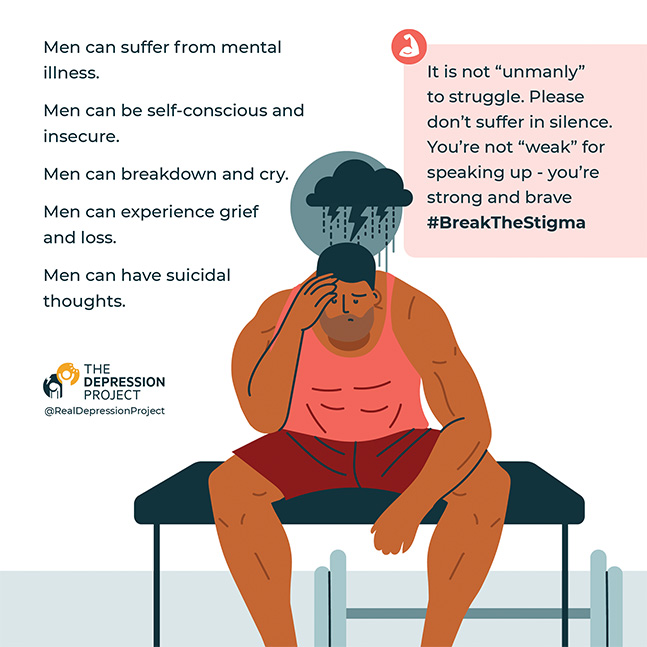
Our Brother’s Keeper
While education is helpful, it’s often the one-on-one interactions that can make a difference in our chapters. Paying attention to our well-being, along with those around us, is critical.
“There’s a spectrum,” Pleiss says. “There’s sick, there’s good, and there’s well. Ideally, we want to be in the ‘well’ category.” Here are questions you can ask yourself:
How do your thoughts, emotions, and behaviors all interact?
What are you doing to make sure the other two components are in-line?
Are you finding those things that, when stress happens, can get you back to center?
Do you have a purpose? Short-term goals?
Are you content? Do you feel like you are a part of something?
“When fraternity is done right, it helps fulfill some of those inner things,” Pleiss says.
“If things are too negative, our emotions lean toward being depressed, and we change our behaviors to things that are more negative,” Pleiss says, adding that this year’s COVID-19 pandemic has taken some positive behaviors—like hanging out with friends—off the table.
So, when you are in a funk, at what point do you seek help?
Pleiss suggests, “When you hit about two weeks and find the things you normally do aren’t working, or anything new you’ve tried to bust you out of the funk, that’s the time to talk to someone. For undergraduates, there are campus resources available, and there are crisis hotlines in every community. You can also call the national suicide prevention hotline in the US at 800-273-8255 or 800-273-8255 in Canada. See the end of the article for other resources.
In addition to additional suicide awareness programs at educational conferences, the Fraternity plans to offer mental health support resources for members soon, according to Director of Education Clay Coleman. “We know we want to offer immediate help and support when needed, and especially view mental health through a broad programmatic lens.”
“We’re also looking to redefine and further equip the chapter office of chaplain to have that officer be the person members can go to access mental health resources available, Coleman adds.
Chapter leaders should be watchful for those who might need help. Often, the brother who is struggling the most appears outwardly to be fine. “You have to be mindful of the people who are giving and giving all the time,” Speaks says. “Those are the people who run out of gas.”

The Impact
The men at Ohio Lambda and Ohio Epsilon paid tribute to their brothers, respectively. The Kent State Phis initiated Cam’s dad and put together a tribute to Cam in the chapter house. Both chapters made contributions to honor the men with Iron Phi status posthumously. Both campuses held candlelight vigils and other memorials. But the impact on the loss of these two Phis (and the many others) continues.
“So many of these young men’s chapter brothers had never experienced any loss, particularly something as tragic as these,” said Sigma South Province President Jim Warner, Akron ’70. That’s why he headed directly to each chapter and brought in fellow Province President Mark Pleiss to help. “I knew I had to be there for my guys,” Warner says.
“I was honestly in a pretty dark place after this happened,” Speaks says. “I had to be mindful of everyone else and connect them to the resources they needed.”
Brandon Counts at Akron had a similar experience.
“I never really took time for myself to make sure I was OK,” Counts says. When he finally had a friend ask how he was doing, he quickly recognized the personal impact of what had happened. “I feel like being a leader; you need to make sure you’re still taking time for yourself.”
Coleman agrees. “Officer burnout is something we continue to address. Our chapter leaders have to take care of themselves before taking care of others. This is about you becoming the greatest version of yourself,” he says.
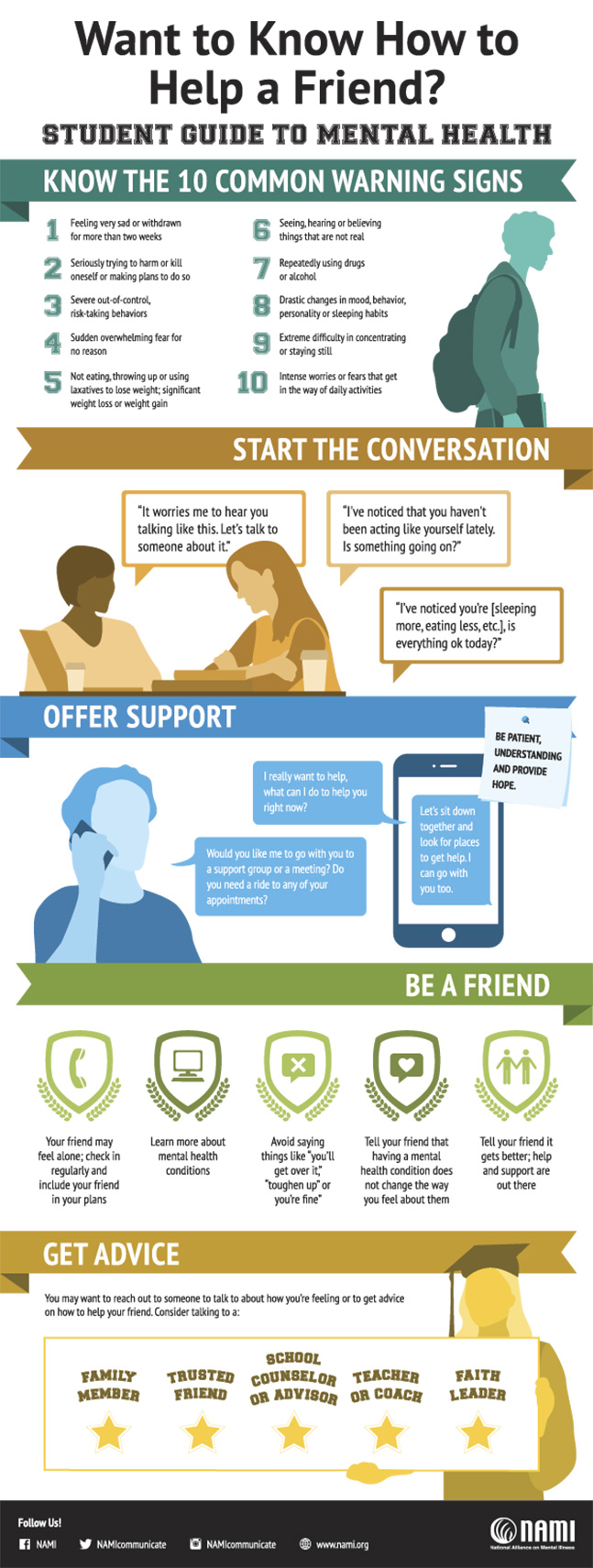
Infographic provided by NAMI. To view larger and learn more, visit: https://phide.lt/3qwY9UL
Mental Health Resources
Depression strikes men of any age or race and some of the most successful people. Consider NBA star Kevin Love, who, despite winning an NBA title and being at the top of his career, has publicly acknowledged his struggles with depression.
The message from Kevin and anyone else dealing with mental health problems is simple: talk to someone. It can start with your brothers in the chapter house, but consider seeking professional help, particularly the things you do to raise your spirits are not effective. Here are some resources to help yourself or a brother with depression:
National Suicide Prevention Lifeline Chat or 1-800-273-TALK (1-800-273-8255)
The Trevor Lifeline (Suicide Prevention for LGBTQ Youth): 1-866-4-U-TREVOR (1-866-488-7386)
CDC-INFO: 1-800-CDC-INFO (1-800-232-4636)
Veterans’ Suicide Prevention Lifeline: 1-800-273-TALK (1-800-273-8255), press 1
Canada Suicide Prevention Hotline: 800-273-8255
How to Tell if a Friend is Struggling
Online Resources for College Mental Health
Transitioning from High School to College and Adulthood Tool-Kit
The post Start the Conversation: College-Age Men, Depression, And Suicide Risks appeared first on Phi Delta Theta.
]]>The post Beneath The Surface: Depression & Resources to Help appeared first on Phi Delta Theta.
]]>National Suicide Prevention Week is from September 9 – 15 this year, but we all know it should be every week. We lose one person to suicide in the United States every 11.7 minutes and suicide is preventable. We know that by helping someone in a time of need you become the greatest version of yourself. One way to do this is to learn the signs of mental distress and how to help that person. Keep your head on a swivel, go with your gut, and if you see something, say something. As a brother of Phi Delta Theta, I would encourage you to learn both the physical and mental health resources available on your campus.
Learn more about our resources to support mental health and wellness.
National Suicide Prevention Lifeline – 1-800-273-8255
The following text is an example of the inner dialogue people with depression or other mental health issues often say to themselves as they struggle to cope with their symptoms.
The Depressed Perspective
I feel this constant dread that is always there. It isn’t from a test, a project, or daily life. It is just me. I joined this Fraternity to be happy, and these brothers are supposed to be my keeper. I am their brother and they can’t even help me. Can’t they see that I am struggling? Don’t they know that I am hurting on the inside? How can I be so alone in a room full of my friends… no, my brothers. They must know what I am thinking and feeling. How couldn’t they know that I feel empty on the inside? These are the people I am closest with, yet it feels like they are worlds away from me. Everyone is excited for the new semester, so I have to fake a smile until everyone else settles into the misery of a college semester.
I am angry, but that anger is controlled until I drink. I keep it bottled up, but the only time I can relax is when I have a couple beers to keep me calm. Another sip of whiskey, and I will chill out. Maybe some fresh air and a smoke. Maybe on the roof, or on the porch, just to get away from everyone. Out of sight. Sometimes it doesn’t work, but that’s normal, right? But these guys don’t want to help me. I NEED their help, and why can’t they see that I want it to all go away. I rather punch a wall than cry. The anger hides my fear, my pain, my struggle. They abandoned me. No one cares. They would be better off if they didn’t have to worry about me. They will be in a better place if I am gone. They can go on without having to help me or pretend to care. I know the solution. I solved the problem… because the problem is me, and if I am not here, then there is no problem.
If the above statements from the depressed perspective are close to how you are feeling or thinking on a regular basis, it is likely that you need to seek professional help. As much as your brothers would like to help and support you, we are ultimately responsible for our own mental health and must invest in our own wellness and utilize our resources.
But what can we do to help those that may be struggling with managing their stress? Take time to discuss mental health with your brothers and pay close attention to their talk, behavior, and their mood. We may not know how our brothers feel or what they are thinking, but we can create the bonds of friendship between one another and be open to the conversations about mental health. If you are concerned a brother may be struggling, reach out to them. Say “I’m here when you need me.” If something seems off, I encourage you to step in before they step out. Zero suicides would be nice and anything short should be unacceptable.
Dennis Gillan is a speaker for suicide prevention and his work is powered by the memories of his two brothers, Mark and Matthew, both lost to suicide. www.dennisgillan.com
Dr. Mark E. Pleiss (Washington & Jefferson ’11) currently serves the Fraternity as the Upsilon South Province President, as well as the Mental Health Expert for the Education Committee. He has been on faculty for Kleberg and PLC. Mark graduated from Washington and Jefferson College with a BA in Psychology in 2011. He then went on to earn his Masters (2013) and Doctorate (2016) in Clinical Psychology from Indiana University of Pennsylvania (IUP).
Learn more about our resources to support mental health and wellness.
The post Beneath The Surface: Depression & Resources to Help appeared first on Phi Delta Theta.
]]>